Theatre


Review
Believe the Rumours: 70s rock ‘n’ roll drama Stereophonic is a pitch-perfect smash hit
Stereophonic examines the egos and excesses of a rock band making their second album under the stifling spotlight of fame, but sings with humour and heart in its West End debut
Here’s the scene, man: it’s Sausalito, California, it’s 1976, it’s the era when rock ‘n’ roll ruled the airwaves. And “everyone’s fucking insane”.
That’s according to Grover, the engineer (played hazily and superbly by Eli Gelb) drafted in to help craft the sophomore album of the unnamed band Stereophonic is examining. It’s sort of through the eyes of Grover we experience Stereophonic, a wannabe producer who’s blagged his way onto the studio’s mixing desk. Though, he undoubtedly gets more than he bargained for, when initial eagerness makes way for exhaustion as we watch his attempts to orchestrate a fracturing band whose ego clashes and absurdly casual excesses are derailing the recording of an album which hopes to build on their newly earned success.
For those that know anything about Fleetwood Mac – and the interpersonal toils of making their era-defining 1977 album, Rumours – then you’ll be immediately familiar with the plot for Stereophonic. But for those that don’t, buckle up.
Playwright David Ajami wrote in The Guardian that it was Led Zeppelin’s ‘Babe I’m Gonna Leave You’ which inspired him to write Stereophonic, but it’s fairly obvious his article was an act of misdirection – likely after a lawsuit from Rumours producer Ken Caillet claiming it was ripped off from his memoir was settled. But the real-life story is prime source material for fleshed-out fictional retellings, Amazon Prime’s Daisy Jones and The Six being another recent example. For its three-hour run time, Stereophonic plays out like an editorial in Rolling Stone magazine, dissipating the chaos and cocaine-addled mythology of making a classic album. The only thing that drags is the characters, because of their consistent inhalation of joints which waft through the Duke Of York’s Theatre.
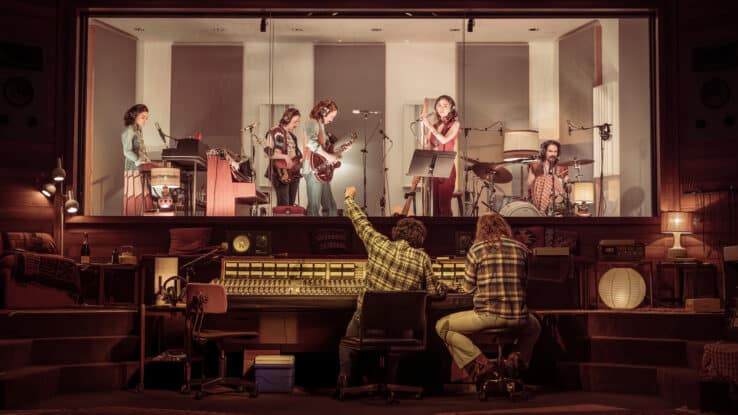
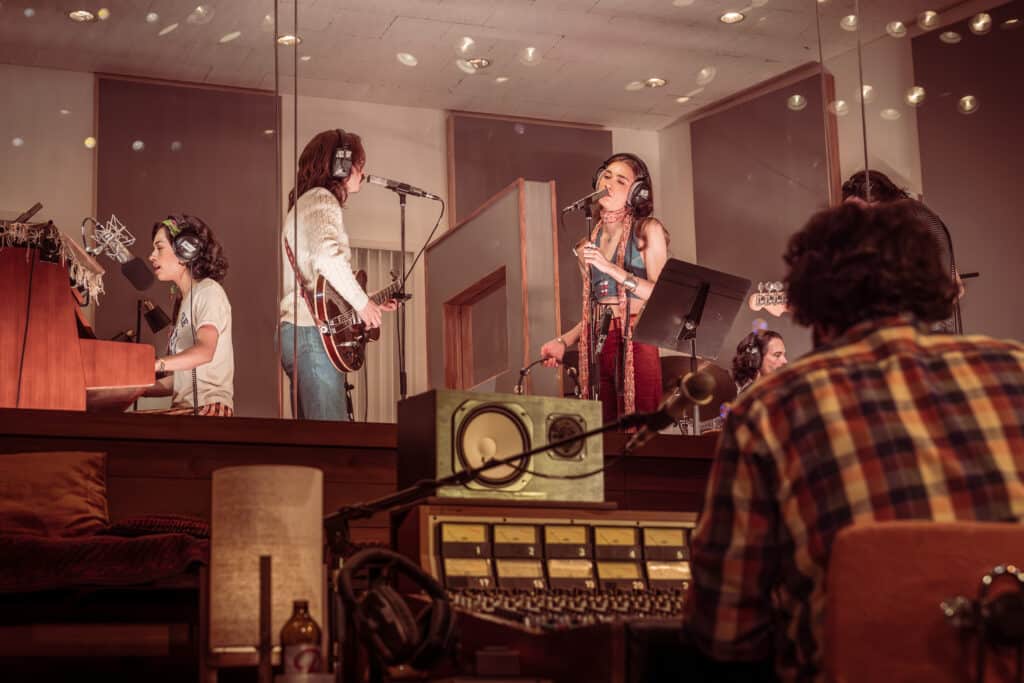
The recording studio is where the story unfolds for the entirety. David Zinn’s retro-fitted stage design is not only beautiful, but offers an interesting narrative dynamic, as the character’s interactions take place between the mixing desk and the recording booth in the background. Everything’s mic’d up like a legit studio, so there’s a real immersive, tactile feel to the theatrics. But as they figure out, someone’s always listening. Rumours anyone?

Speaking of theatrics, the actor’s chemistry is as palpable as the plumes billowing from their smokes. With much of the same cast having transferred over from the Broadway run, they embody the same tensions of a working rock band, as well as the touching moments – once the cocaine has worn off, that is. Tempers continue to fray and romances crumble as individual visions clash, all the while the band’s previous records climb up the charts over the course of a year in which this album process takes place.
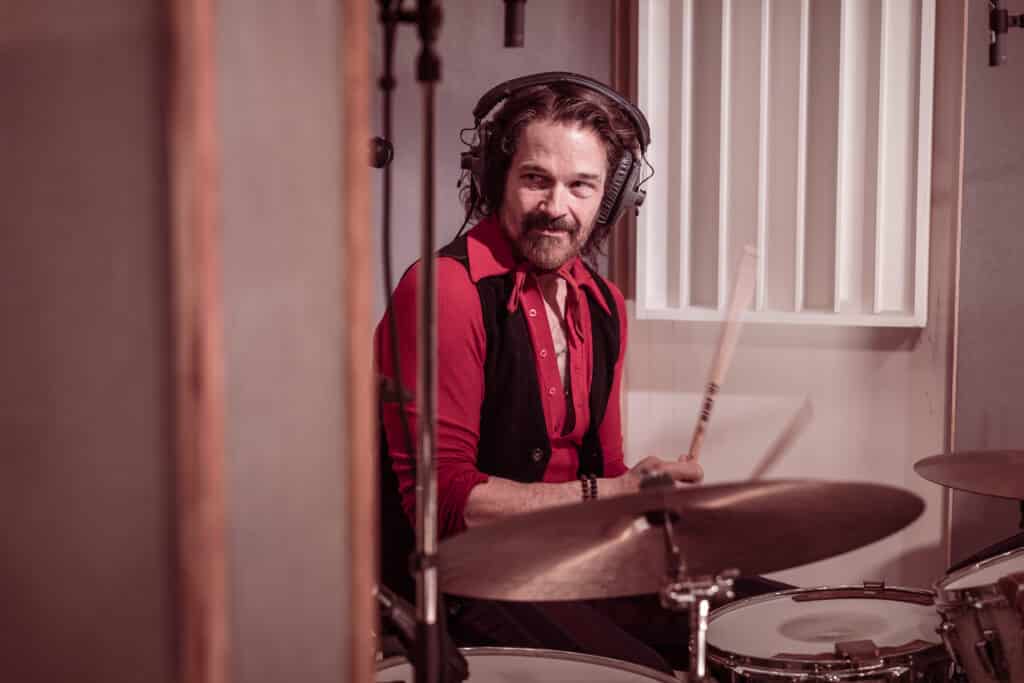
The characters are loosely based on recognisable rock stars; drummer Simon (played by Chris Stack) is like John Cleese doing a Mick Fleetwood impression; bassist Reg (played by understudy Sam Denia in lieu of Zachary Hart) has a Manchester twang that echoes the Laurel Canyon convert Graham Nash; conflicted singers and partners of the aforementioned rhythm section in Diana and Holly (played by Lucy Karczewski and Nia Towle respectively) question their roles in the band and in their relationships a la Stevie Nicks and Christine McVie; bandleader Peter (played by Jack Riddiford) drives himself and the group to the brink of destruction in his pursuit of perfection. No surprises to who he’s based on. Eli Gelb’s Grover and his nasally-voiced studio sidekick Charlie (played by Andrew R. Butler) provide dazed and confused comedy relief as the only sane (well, kind of) people in the building.
One of the play’s central characters however, is the music. Written by former Arcade Fire man Will Butler, the songs of Stereophonic don’t sound exactly like Fleetwood Mac, more like if Arcade Fire made a pastiche 70s soft rock album. They’re addictive enough to carry the purpose of the drama, though it’s the cast’s live, plugged-in interpretations that convince you you’re watching the recording take place in real time. You’re privy to the lightbulb moments when everything clicks, seeing the band jam out to a euphoric crescendo when they arrive at the perfect take on tape, some of which rightly draw applause from the audience.
Despite being about music-making, Stereophonic isn’t a musical. The fly-on-the-wall snapshot is more akin to Peter Jackson’s unearthed time capsule Get Back, with some of the dialogue as benign as you’d expect from musicians stoned out of their mind for months on end. It’s funnier than you’d perhaps anticipate given the breakups and breakdowns. It’s as engrossing as watching your favourite band figure out and freak out about how to navigate being on the cusp of superstardom.
It’s easy to will them on as their relationships falter under the pressure of creation, though, the play ends without knowing if the fruits of their labour was a success. What we do know is that Stereophonic became the most Tony Award nominated play of all time after its Broadway opening. No wonder – it’s a rollicking rock ‘n’ roll rollercoaster.

All photos: Marc Brenner
Stereophonic is on at the Duke Of York’s Theatre in London until 11 October 2025. Find tickets here.