Music


Interview
grandson: “We’re a f*cking rock and roll machine”
Jordan Benjamin opens up on his most uncompromising era yet as he prepares to bring the resistance to the UK with his upcoming headline tour
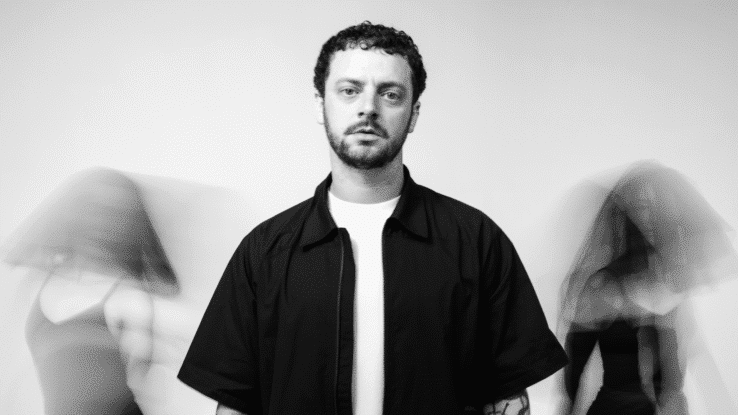
With his third album INERTIA, grandson is stepping into a new chapter on his own terms. Released via the musician’s own XX Records, its arrival marks the start of a fresh era, defined by bigger riffs, sharper teeth and a clearer mission.
Tackling modern life head on, its eleven tracks refuse to sand down their edges to fit neatly into pre-defined boxes. A rallying cry that collides heavy rap with a nu-metal aggression and arena-ready hooks, it’s an album driven by the belief that socially charged music still holds inexhaustible power, especially when it’s the kind made to be screamed back by thousands of passionate voices in unison.
With themes spiralling out from the personal to the systemic, INERTIA explores everything from the “celebritisation” of billionaires and culture wars to how our apathy is being weaponised right before our eyes. Surging with tension, fury, and a longing for change, it’s an album that pushes you to fight for what you believe, no matter how impossible it may seem.
Heading into a new chapter with a staunch focus on community and collective forward motion, grandson is set to bring INERTIA to the UK for a run of headline shows this February and March. Ahead of his return to the stage, we spoke to him about the vital conversations driving his latest album, his transition to life as an independent artist and why the fans now sit at the centre of every decision he makes.
![grandson - LITTLE WHITE LIES [Official Video]](https://i.ytimg.com/vi/sVa22GU15D0/0.jpg)
You’re a few months into life with your third album, INERTIA, out in the world, and this is very much the start of a new chapter for grandson. It’s the most unapologetic you’ve ever been, and the record was created with a small circle of close collaborators and released on your own terms after leaving the major-label system. Now that it’s been out in the world a little while, what does this chapter feel like from the inside?
So far, every show I’ve played on this run, every person I’ve spoken with and rocked with along the way… It has all just reaffirmed that these choices I made to take the project heavier and more socially conscious were the right choices for me and the project at this time. It has been really powerful to refocus my relationship with fans and surrender to the uncertainty of the present and future of the music industry as far as restructuring the back-end stuff and rethinking my distribution model. I want to be beholden to my audience and not be stuck riding the wave through this clusterfuck while these major labels figure out how to service all their artists, not just the five or ten at the top, or the oldies with an existing legacy.
The title of INERTIA came from a conversation with your dad about people walking a path they never really chose, and from your sense that there’s an “inevitability” to the way our systems are collapsing. At what point did you realise that word summed up everything you were trying to say on this record?
I had a couple parameters for an album title. I wanted a shorter album title than my previous albums, and I wanted a title that felt like movement, motion, the chaos of a mosh pit without necessarily being an on-the-nose verb. INERTIA felt like momentum. It felt like inevitability, which I wanted to evoke. I hadn’t heard anyone else use it either, which I couldn’t believe. Then, another group named their album INERTIA at literally the exact same time as I announced mine. Fucking classic.
This is your first album released independently on your own label, XX Records. What felt different about making INERTIA outside the old label system?
I felt freer. I had way less input on music video concepts, but the people hired to work on the record felt like true fans of the project first. They were brought on for the unique ways they could contribute and because they believed in the vision, as opposed to an army of staff already working at the label who inherit the project and are constantly at risk of corporate turnover.
Sonically, INERTIA feels like a proper heavy rock record – big riffs, thrash moments, nu-metal edges – but still with that hip-hop and electronic DNA you’ve always had. When you first sat down with No Love, Maxwell Urasky and your touring guitarist Leo Varella, what was the mission statement for how you wanted INERTIA to sound?
We wanted to experiment with building the same heavy moments of impact my music has always had, but instead of going bigger and more maximal with the production, achieve that moment of impact through more dynamic range and tense arrangements of songs. No Love is an incredible multi-instrumentalist, so he would alternate between synths and playing MIDI drums while Max, Leo, and I would alternate guitar, bass, and I’d be pacing around outside smoking and writing lyrics. We all love bands like System Of A Down, Queens Of The Stone Age, Pinegrove, A Perfect Circle, Deftones, Mastodon and Rage Against The Machine. I think they understood the places I wanted to expand into artistically.
‘BRAINROT’ was the first glimpse people got into this era – a song about doomscrolling and how the worst things you’ve ever seen end up sandwiched between memes and thirst traps. It taps into this idea that our attention spans are being deliberately weaponised, that apathy isn’t an accident, which is a big theme across the album. At what point in the process did that song come to life?
That song actually came towards the end of the writing process, from wanting one more song with an overtly melodic vocal chorus. It’s sort of a thesis statement to introduce the fans, so it makes sense that it had to be written last. It came after those themes had been more or less established.
![grandson - BRAINROT [Official Video]](https://i.ytimg.com/vi/xKH3Hj4lqLs/0.jpg)
The topics you delve into across the album are often things you have to carefully consider your approach with. When we look at something like ‘SELF IMMOLATION’, which was inspired in part by Aaron Bushnell’s protest – someone literally setting themselves on fire just to be heard, and still being met with guns. How do you approach writing about something that extreme without slipping into shock value or flattening the human being at the centre of it?
That’s a big challenge that I take quite seriously, not wanting to shy away from the big events and topics that we are all impacted by. There’s always a fear of getting it ‘wrong’ and having people misinterpret what the song is about or feeling like the subject matter is somehow opportunistic. Ultimately, I try not to let the fear or the awareness that the song will be consumed and dissected later impact the creative process. I was moved by Aaron Bushnell’s sacrifice, and the students across university campuses willing to risk their academic futures in demanding these institutions divest from these military tech companies that implicate them and their students. I thought that the visual of cops descending on a man who was literally on fire and in a panic resorting to threats and drawing their guns on him was so emblematic of how wrong we often get these sorts of confrontations as a society. I wrote that song about it.
There’s obviously a lot of meaning packed into these songs, but they’re meant to live on the same rock playlists as everything else, not just confined to the “protest music” corner. When you were writing these choruses, how conscious were you of making them feel like anthems people could scream in a festival field? Was that dual purpose something that felt essential to hit?
INERTIA began as an idea while I was on a 100-date tour promoting my previous album, which was a softer alt-rap project that was deeply influenced by my drug use and mental health at the time. I definitely knew going into this that I wanted to make heavy rock jams that would rock big and small stages around the world. I wasn’t so caught up in the anthemic aspirations of the songs though. I would’ve written something much simpler and more digestible if that was the case. I wanted to showcase great chops, great riffs and writing, powerful moments of cathartic release, and write a time capsule for this fucked up time we are living through.
It feels as though often artists have to water down their morals in some way in order to achieve success. That feels like a big part of what this album is fighting against, because you can do both. You’ve played sold-out benefit shows in London, LA and Hamburg and raised thousands for LGBTQ rights, migrant rights, and kids in war zones. How do those nights feed back into the songs on INERTIA and the way you see your role as an artist right now?
This record cycle was for me about reestablishing that foundation of who I am as an artist, what I sound like and what I stand for. Finding ways to raise money and awareness at my merch table and with these benefit shows was always going to be important for me. Not only does it give a bit of a morale boost to the activists and organisers working tirelessly at these non-profit organisations to get a shout out at a rock show, and get them to speak to a larger audience… But it also helps to open people’s eyes to the grassroots resistance movements happening right there in their city. People feel so helpless right now in the shadow of these massive issues we face, but by starting small through civic participation in our own communities, we can combat that apathy. I connect with a higher purpose as a rock artist with a message of agency, standing up for the same communities that have supported me and my work from the very start.

You’ve said the thing that really “re-sparked” your purpose was realising what fans come to a grandson show for – to scream, move, and find a community that can turn hopelessness into something meaningful. How has that realisation shaped the way you’ve built the live show around this album?
The arc of the grandson show now is made with that core intention in mind, helping people access their anger, making them feel safe, included and welcome. It’s about finding constructive non-violent outlets for our collective pain and grief and ultimately finding strength and hope through feeling less alone. The night is very much structured in setlist choices and talk breaks with that clear direction at the forefront.
For anyone in the UK who maybe only knows you from ‘Blood // Water’ or seeing your name on a festival poster, why is INERTIA the perfect entry point into who grandson is in 2026 – and what should they expect if their first real experience is buying a ticket and walking into one of these shows?
I’ve spent nearly 10 years playing hundreds of shows around the world, building this core audience who resonate with the message. Together we’ve made a culture and a scene that I truly haven’t found anywhere else. It’s adjacent to things that are a lot more popular and well-known, but you can still be early enough to make your way to the front, be a part of the ground swell. We’re three quarters of the way through a world tour, playing at our heaviest and most polished. We’re a fucking rock and roll machine, not shying away from staring directly at the things that are hardest to talk about. I think it’s a special show. You’ll love it if you come and you’re a moron if you miss it. But shit, what do I know. I’m biased!