Theatre


Interview
Meet the team who put the movement in Operation Mincemeat
We chat to the choreographers of the smash-hit musical ahead of the show’s UK tour
It’s possible to find a review of Operation Mincemeat that isn’t a confident five stars, but it certainly isn’t easy. The Fringe musical about the deception operation that won us the war made waves when it appeared on London stages, becoming the best-reviewed show in West End history. It’s unorthodox in every sense, making comedy out of serious subject matter, performed by just five actors, still retaining that spontaneous Fringe feel even as it now plays on Broadway. Still, it’s the very definition of hit.
Operation Mincemeat returns to the UK in February 2026, when it kicks off a mammoth UK tour. Ahead of its comeback, we went backstage with choreography team and mother-in-law/son-in-law duo Jenny Arnold and Paul Isiah Isles to talk about the role they played in bringing the show to life.
What’s your full job title?
JENNY: Choreographer for Operation Mincemeat.
PAUL: I’m the UK Associate Choreographer.
What responsibilities are covered under those job titles?
JENNY: All the dancing and movement, but it was very much collaborative, because when I first came on board, they had already directed it, choreographed it, they were starring in it, and doing everything, which is why when Jon Thoday, who is the producer, contacted me, he said, “They need eyes out front, because nobody’s given them notes in a very, very long time.” So I came in and gave them lots of notes, and we changed things and adapted it.
But because they’ve done so much of it themselves, a lot of their ideas are still there, which is unusual. Normally when I choreograph I start by meeting with the director and we go from the word go, but because I was working with the writers, it was a different thing. For example, the opening number of Act Two, which is called ‘Das Übermensch’, where they’re all dressed as nazis – that was all their idea, and it used to be a much longer number, which has now been cut. They wanted something a bit more hip-hop, which I got Paul to do, because he knows more about hip-hop than me. Things like that, they’re all their ideas. It’s slightly different from normal.
What does a day of work look like for you?
PAUL: During rehearsal periods, or when we put in a new cast, it’s probably a 10 o’clock meet and greet with a physical warm up and then a vocal warm up. Then we rehearse either some of the dance numbers from the show, or blocking. Most stages are numbered from zero, from the middle, out. 2,4,6,8,10,12 – every sort of two foot is another number. When you’re blocking, you get the actors to go to number four when they’re doing that bit, then to number six when they’re doing that bit, so then everything’s sort of spaced out well on the stage. Staging is a very important part of it, getting to the right place at the right time.
JENNY: Then you’re meant to do previews, where we’re meant to look at it quite a lot. When we were in America, we had a lot of previews, about 20 days, because Jon didn’t start it out of New York. Normally you’d test it in Washington or somewhere, but because we went straight in, they wanted to see the reaction. We did previews and then we rehearsed in the afternoons from what happened the night before. The Americans took to it really well. We hardly had to change anything. There were only a few words that they didn’t understand – we thought there’d be quite a lot, but they really, really understand it there.
The response in the UK has been extraordinary as well.
JENNY: It has. It’s a very difficult show to explain. I couldn’t really explain it, but I just knew it was going to be big. Early on I said to Jon, “I think this is going to be big, and I think you need to get a director as well, because it’s very early, just being on your own.” The musical director at the time was also one of the writers. There was nobody to say, is this good or is it terrible? It’s grown in that sense.
When do you usually get a sense of when something’s going to be great?
JENNY: Quite early on. The one that we thought was brilliant, but we weren’t sure was Jerry Springer: The Opera. It was a brilliant show but it was the first with really dodgy language, because of what it was. We did have the Christians banging on the doors… It was before The Book Of Mormon. I just thought the music was so good. But you do sometimes see shows, and think, “This is so terrible. At what point did the producer not think, ‘We shouldn’t put this on?'”
When you do create choreography from scratch, what’s that process usually like?
JENNY: What I usually do is have meetings with the director, and I like to get the music, and then I usually play around with things at home. I’d rather go in with a plan, which you can always change, because otherwise you’ve got 15 pairs of eyes looking at you saying, “Do something.” I hate that. Sometimes that works out brilliantly, but it’s like someone saying to you, “Right, write an essay and I’m going to watch you.” So that’s what I usually do – I go in with an idea. Quite often, when I worked at the RSC, I’d have a big number at the end, so I usually try and go beginning to end, and then they all panic. But I want to get the whole thing down because I want to know from the director whether this is what they want. No point spending three hours to help you with one step. Once it’s up and running, you tweak things anyway.
Other than Operation Mincemeat, what’s your favourite production you’ve worked on?
JENNY: I did a very lovely production of Fiddler On The Roof, which I really enjoyed because that just all came together beautifully. I did that in Korea, but I did it with an Australian cast, with rehearsals in Australia. I’ve worked in lots of places, but Korea was the only country I felt like a real stranger. I couldn’t read or understand anything. I’ve worked on maybe 200 musicals, so there’s a lot to choose from. When I used to do the Footlights, that was fun, because they were so creative. I did a lot with Harry Hill, and that was sort of mad. I’d get the script, and it would say, “A piece of mincemeat dances.” And I’d have to choreograph for someone dressed up as mincemeat.
Were there any considerations for Operation Mincemeat that were unique to this show?
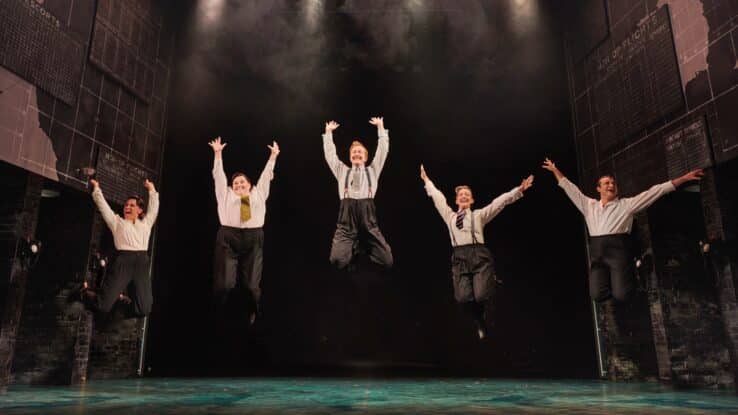
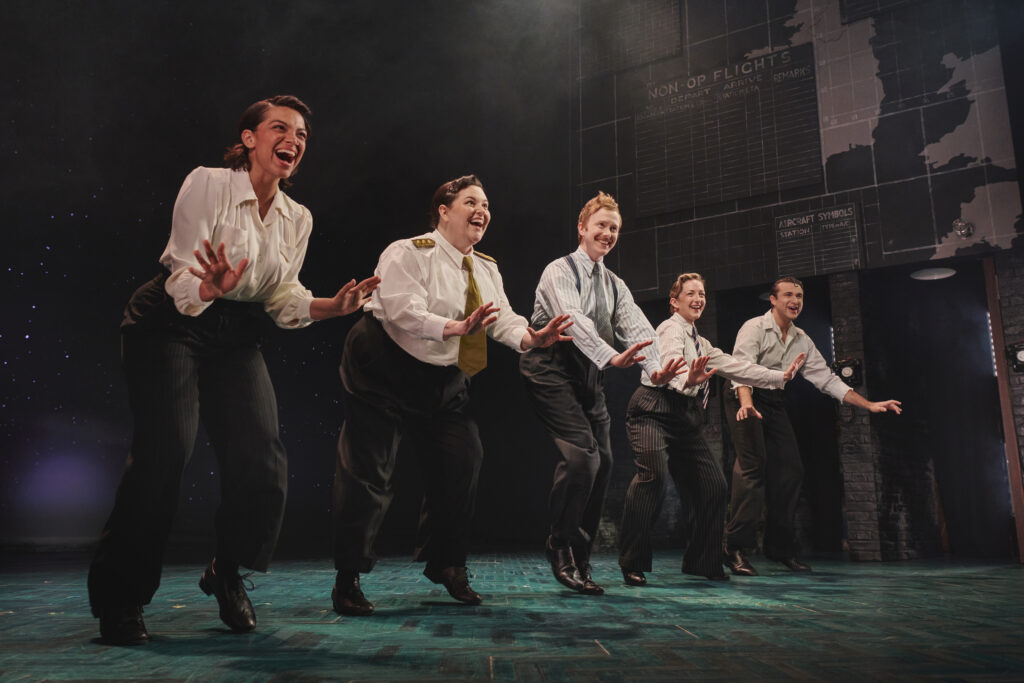
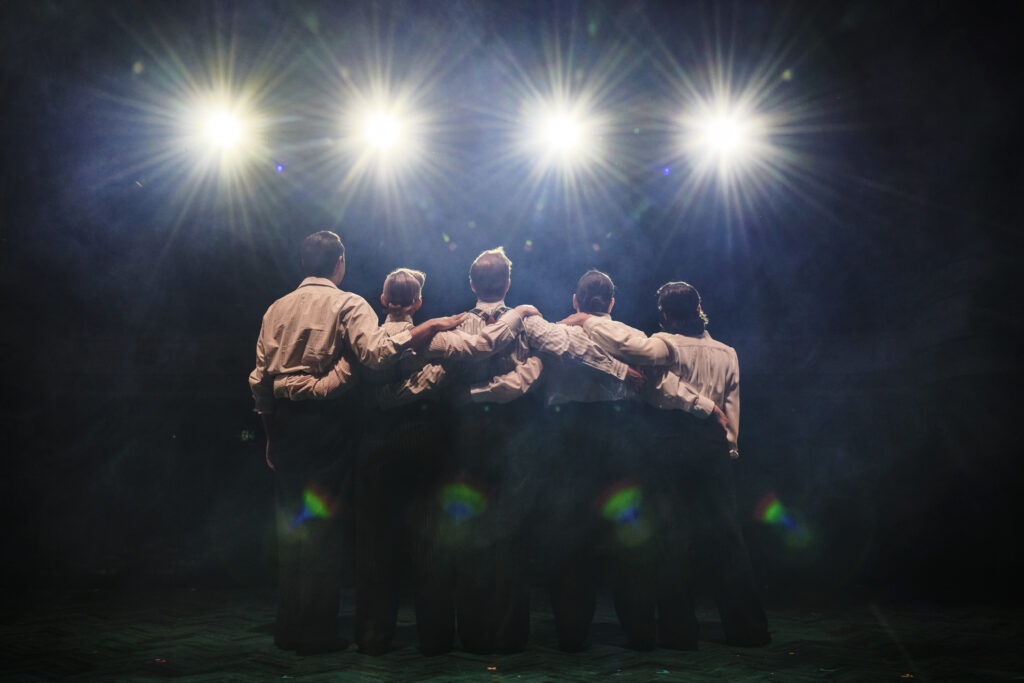
PAUL: Because there’s only five people in the show, it’s quite hard to choreograph a group number. Usually, musicals have leads and an ensemble to make up a dance number, but because there’s only five actors, it’s slightly harder, because no one can hide, no one’s at the back – you’ve got to try and make pretty patterns with five people. So yeah, it is unique. It’s bit harder than normal, because all the actors are quite different as well.
JENNY: I think we were very concerned that we didn’t lose its Fringe feel when it moved to a bigger stage, because they started by just having boxes which would then become various parts of the set. We didn’t want to lose that, because that was the joy of it. We had to work on trying to not make it all too big and glitzy.
I think when I audition, I usually make sure they can move first, because it does feel much easier. I always say to them, every time you change your costume you’re usually moving at the same time, so it has to become second nature. The more we do it, the more we try and get people who can move.
PAUL: The original cast were called Split Lip. They’re three, well, four writers – one of them isn’t in the show, but three of them are. They were basically writers and actors and comedians, so their dance backgrounds weren’t very high. We had to sort of cater for that.
Is it a challenge working with actors who don’t normally do much dancing?
PAUL: You usually work to their capability – whatever they can do that looks good. Obviously with this show there was a bit of a blueprint at the beginning, and we’ve just sort of fine-tuned with each cast. Now the choreography is mainly mine and Jenny’s, but it started off with them putting it together. We’ve just come in to make it more of a West End/Broadway show, basically.
JENNY: I’m quite good with non-dancers, because I worked a lot in Cambridge with the Footlights and a lot of those comedy people need to move, but don’t know how to move. I also do quite a few operas, and again, as soon as you say, “Walk across the stage,” they walk with their arms stiff. So I’m quite good at working with non-dancers, and I find it quite satisfying.
So even when the actors have to do something as simple as cross the stage, you’re involved there?
JENNY: Yes. It’s all those small details, and with Mincemeat, there’s a lot. Every time they move the scenery or change costume, take their tie off, they sort of do it in movement as well. That’s all our job.

Do you have a favourite moment in the show?
PAUL: I mean, it’s not a dance number, but my favourite part of the show is probably a song called ‘Dear Bill’, where Hester is trying to write a letter to a loved one. This is the letter that stops the war, and the way this letter hits you is quite powerful. The actor who plays it is a male presenting actor playing a female character in the show, and the transformation of the actor doing that is just unbelievable to watch. It’s really quite powerful. Then the next scene, the same actor plays someone completely different, a captain of a ship, and the change between the two characters is probably about 10 seconds. The transformation is quite amazing.
If someone wanted to begin a career in in choreography, where would be a good place to start?
JENNY: Well, that’s interesting, because nowadays I think they do much more choreography when they’re training. When I was training, you did musical theatre, ballet, dance or drama. But I think probably the best way is to try and assist somebody on the job. It’s better to do it with somebody hands on. I actually learned by doing it, you know, seeing what works and what doesn’t work.
What advice would you give prospective choreographers?
PAUL: Be open, because some choreographers sort of come up with ideas by themselves in a studio, and then when they put it in the room with other people, sometimes it doesn’t quite work. I think you have to be open to change your idea on the spot when you need to adjust it to people’s bodies.
What’s your favourite aspect of your job?
JENNY: When you first see it all come together. When you go into the theatre, when you’ve just done the last run in the rehearsal room, and everything is fabulous and you’re happy, then you go into the tech run and everything goes horribly wrong, it’s always a disappointment, I think. They’re contending with costumes and the lighting’s all not right… But I love the last round in the rehearsal room when I think, “We’ve got there – now how can we make it better?”
PAUL: In this show, being in the rehearsal room with the writers originally was great because we sort of bounced off each other and came up with ideas. Coming up with ‘Das Übermensch’ with the writers and Jenny was really good fun. That’s always the best part – being in the room and creating stuff with the actors, with the director, with other people. That’s basically it, in a nutshell.
What’s special about Operation Mincemeat?
PAUL: I mean, the fact is that it’s true story is amazing, and the fact that it started as a Fringe show as well. It’s a story of five misfits who come together to pull off the biggest plan in World War history. It’s funny, it’s emotional, it’s true… all those strands make it a hit.
JENNY: When I was first talking to people about it, it was so difficult to explain, because I’d say, “It’s a true story, which is brilliant, and it’s funny.” That confused some people who had seen the film, which is not so funny. I just think it’s a very special little piece. Susan Stroman came to see the show, and she wrote a lovely letter to the assistant director saying, “It felt as though they made it up in front of us.” I think that’s such a good description, because it does fit like they’re just making it up and telling you a story. It’s so quick. They’re rushing around and they talk so fast – my sister had to see it several times before she could understand everything they said, because so fast that you can miss some of the smaller details. But it is a very special show. I don’t think there’s anything else quite like it, to have such a serious subject and make it really funny, but with some lovely, poignant moments as well. It just has got all the emotions.
Find tickets for the Operation Mincemeat UK tour here