Review


Review
Why Cymande’s O2 Academy Brixton concert was a full-circle triumph
The south London legends returned with their Renascence tour, and this time, the message was louder than ever
The audience’s reaction when Cymande stepped on stage almost transcended language. From the first note, a wave of overwhelming joy, nostalgia and reverence surged through the crowd. Cymande’s joy was even greater than their fans as they played this homecoming show at the O2 Academy Brixton; a full-circle moment that carried deep meaning. It wasn’t just a concert, it was a gift for British Music History, a celebration of the South London legends right in the place that birthed their story. The sight of fans from every background, spanning generations – many not even born when the songs first dropped – dancing in unison and singing along was a testament of the enduring power of Cymande’s timeless music.
For one-and-a-half-hours, Cymande kept the room buzzing, heads nodding to hit after hit, groove after groove, with a set-list packed with pure classics that reminded everyone why their legacy endures: ‘Sweden’, ‘Getting It Back’, ‘Doing It With Feeling’, ‘Chasing An Empty Dream’, ‘Crawshay’, ‘Baby Ooh’, ‘Rickshaw’, ‘Dove’, ‘Bra’, ‘Coltrane’, ‘Brothers On The Slide’, ‘How We Roll’, ‘The Message’, ‘It’s Magic’.
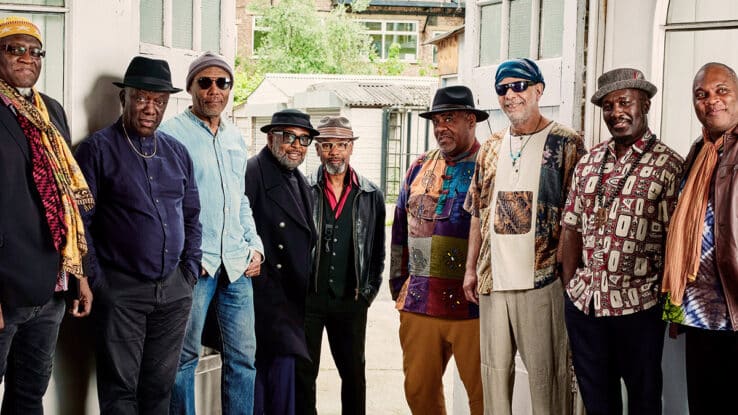
The line-up graced the stage with impeccable musicianship: from the rhythm section locking that signature groove with founding members Steve Scipio (bass) and Patrick Patterson (guitar), joined by Richard Bailey (drums), Donald Gamble (congas/percussion) and Adrian Reid (keyboard) harmonising with lush melodic textures; to the horn section unleashing the trademark riffs with Kevin G Davy (trumpet), Toni Kofi and Denys Baptiste (saxophone). At the front of it all was Ray Simpson, delivering soulful vocals with pure charisma and effortless command.
The night reached its peak when legendary drummer Richard Bailey left the crowd breathless with an unforgettable solo: a pure masterclass in rhythm. Every strike of the snare, every heartbeat of the bass drum and each cymbal crash built into a thunderous crescendo with pure and raw energy. When the final hit landed, the entire room erupted with a roaring standing ovation, an outpouring of admiration.
Formed in the early 1970s in South London by Steve Scipio and Patrick Patterson, Cymande (named after a famous Calypso song’s chorus) started with self-taught Caribbean born musicians and singers living just doors apart.
Cymande’s original line-up consists of Patrick Patterson (guitar), Steve Scipio (bass), Sam Kelly (drums), the late Pablo Gonsales (percussion, vocals), Joey Dee, Ray King & Jimmy Lindsay (vocals), Mike Rose (saxophone, flute, percussion), Derek Gibbs (alto saxophone), Peter Serreo & Desmond Atwell (tenor saxophones). Together, they created a unique body of music (that is bigger than music) blending West Indian Folk, African Music, Jazz, Funk, Soul, R&B Rock, and Rastafarian Rhythms. They released three masterpiece albums and emerged as one of the first black British bands.
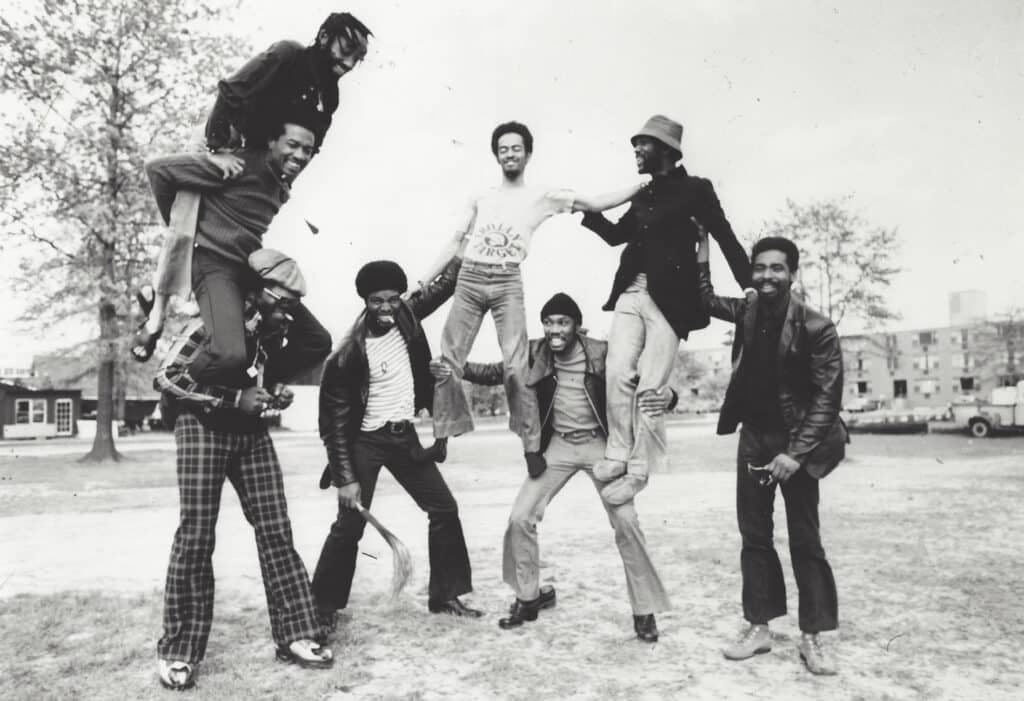
Between 1972 and 1973, as Cymande’s music reached the American charts, they hit the road and became the hottest act playing stadiums supporting Al Green. They made history by becoming the first British based band to perform at the world-renowned Apollo Theatre in New York opening for Jerry Butler. They shared the stage with many big names including Patti LaBelle, Billy Preston, Ramsey Lewis, Edwin Starr, Albert King, KC and The Sunshine Band, Kool and the Gang and the Latin ensemble, Mandrill. Cymande were fully embraced by the ecstatic American crowd, to the point that many New York based DJs never even knew they were from London.

Despite achieving legendary status and fervent acclaim in the States, the enthusiasm in the UK was comparatively cold. Away from mainstream, Cymande were often misunderstood by record companies as their soundscape didn’t fit into any familiar categories. But Cymande is just Cymande. Frustrated by the indifference and lack of recognition from the industry, the band eventually split in 1975. They dealt with the painful feeling of unfulfilled dream by retraining and pursuing other jobs.
Meanwhile, Cymande’s early tracks became the bible for many hip hop pioneers, rappers and DJs across the world. To their surprise, they became the most sampled black British band of all time. Completely on their own, without any promotion, Cymande grew as the most influential band in hip hop, house, dance and more. They set the tone for a lot of music we hear today: bands, artists, and DJs such as De La Soul, The Fugees, Wu-Tang Clan, Soul II Soul, MC Solaar, Norman Jay, DJ Jazzy Jay, Mark Ronson and many more artists. From this unexpected and overwhelming appreciation, the message was clear: give the fans what they want, more concerts and recordings.

In 2014, co-founders Patrick Patterson and Steve Scipio decided to reform the group with its original members and then integrated other successful and reputable touring musicians such as the late Ray Carless (saxophone), and the current line-up honours what Cymande always dreamt of.
In Brixton, they performed a historic comeback concert for fans that thought they would never play again. After being unsung heroes for many years, Cymande continue touring and collaborating with the new generation of artists (such as Celeste) – now finally earning well-deserved recognition from generations.
Late to the party? Listen to Cymande here