New Music


Interview
Julia Cumming: “So much of my self-worth was defined by what people thought of me”
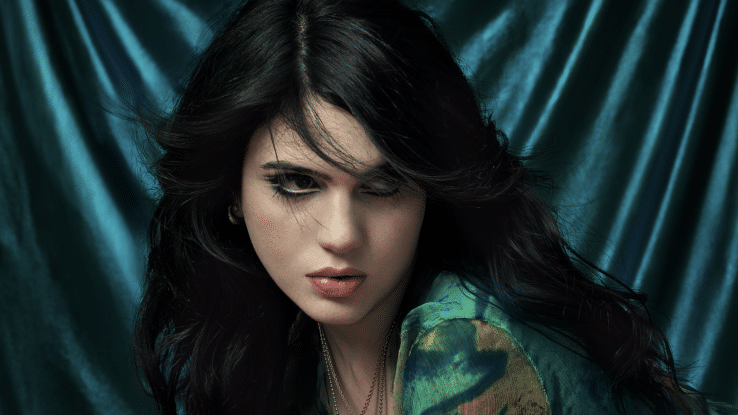
Ahead of her appearance at The Great Escape in Brighton, Julia Cumming opens up about the liberation of making her debut solo record
Despite only having just reached the hallowed age of 30, Julia Cumming is a music industry veteran. She formed bubblegum-pop girl group Supercute! at the age of just 13 where she was mentored by Kate Nash, then earned her stripes in New York City’s DIY scene after joining psych-rock power trio Sunflower Bean, making her name as a punky peroxide blonde bass-slinger.
But with her debut solo album, succinctly titled Julia, Cumming has dispelled any pretension and the kind of gatekeeping culture associated with life in a rock band. It’s exhausting constantly playing up to the gaze of others. Now, she’s ready and willing to be truly seen.

Julia is a melange of warm, uplifting easy listening tropes, akin to the likes of Carole King, Joni Mitchell, Brian Wilson or even Burt Bacharach which she’s cited as primary influences in the run up to the album’s release. Cumming also referred to Julia as an “anti-cool” album. Ironically, it’s pretty darn cool making such a distinct subversive pivot with her first move as a fledgling solo artist.
Ahead of her appearance at Ticketmaster’s New Music showcase on Thursday 14 May at The Great Escape on Brighton beach – and virtually as soon as she touched down on British soil – Julia opened up about the liberation of writing the album in private, embracing her formative music influences in her work, and navigating this new era alone without the safety net of her bandmates:
Why was now the right time in your life and career to step out on your own?
This was the right time to make this record because I’ve made so many records previously and experienced so much through them, that I knew what I wanted this record to have that I hadn’t done before. I reached into areas that were inaccessible to me then. It takes time, it takes experience. I was able to work on Julia outside of the public eye, in private, so I was able to develop it the way I wanted. It was a beautiful thing.
What was the first song from the album you wrote, and at what point did you feel like making a solo record was a natural next move?
‘My Life’. The song came to me after a period of intense personal pressure. It brought a lot of my ideas together. Once I found this voice, I knew I had to adjust my creative life to accommodate it. It was this song that let me know I was ready.

As a New Yorker, what role did being in Los Angeles play when you recorded the album?
I’m a New Yorker, through and through. But I wanted to record it in Los Angeles. It has the feel of both cities, as both cities are a part of me. All the songs were written on my piano at home in New York, but I really developed them in LA. That’s where my collaborator Brian [Robert Jones] lives, and the eventual producer Chris Coady lives. LA has such a rich lineage of fantastic studio musicians, which was a huge part of my vision for the record, getting this group of Californian musicians playing together. Energetically, it made a lot of sense. But for better or worse, I’m always a New York girl.
There’s still a strong sense of New York musical heritage, with [Yeah Yeah Yeahs’] Nick Zinner contributing to two tracks. How did that come about?
He’s close with Chris Coady. We kind of knew each other through [Sunflower] Bean, but never really connected. I ended up speaking with him and told him about the record, then asked him to listen to it and see if he’d contribute. His contributions deepened the experience of the songs, and added a special context that only Nick Zinner can do. He’s so talented.
Your dad is a Burt Bacharach historian, and you’ve mentioned that the likes of Brian Wilson and Carole King have played a huge part in your musical make-up. Were there any specific songs or albums by the aforementioned that you drew from when writing and recording Julia?
I’m a major Brian Wilson fan, but especially The Beach Boys’ records after the dissolution of Smile. So, Smiley Smile, Friends, Wild Honey, Sunflower, all of those records are so important to me. I spent a lot of time reconnecting to those records when I was writing the album.
When you noticed elements of these albums seeping into your songwriting, how did it feel leaning into it?
It was very healing, and it’s taken a long time to understand why. Even through this press process I’ve been figuring it out. I grew up in the East Village, and I knew I wanted to be in a band so started playing shows immediately. You have to write the song, then play the song, write the song, then play the song. Testing out songs at open mics, and creating that connection to live performance. That’s a big part of how Sunflower Bean has interacted with the world. There’s always been this deep connection to live music, which is an aspect I’ve been proud of in my career. But I think for this record, doing it outside of the public eye, I didn’t realise how much that process of always being seen (or trying to be seen) also made me vulnerable. So much of my self worth was defined by what people thought of me. Going on this journey as a songwriter, where the only interest was following an idea to the end to make it the best it can be, for enjoyment, was different for me and was ultimately very healing.
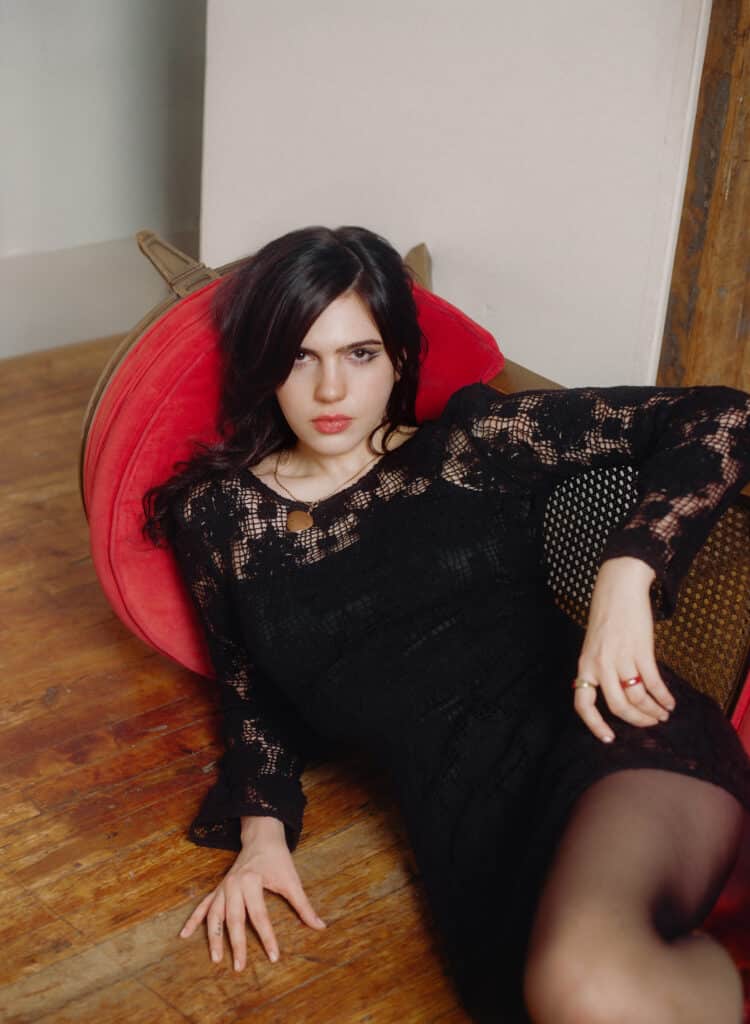
There’s a real sense of liberation throughout Julia. Is this you reconciling with the aspects of your personality and your tastes that you previously hid?
Absolutely. That goes into calling it an “anti-cool” record. I hope that I’ve been able to represent that properly. It’s not that I thought I was cool, or that I think these references are uncool. I wanted to make something where there were no barriers to entry. You don’t have to know anything about music history to like it. There’s none of the posturing that’s involved in being a music fan, impressing others and fitting in, which doesn’t need to be part of the process. I wanted it to feel like there’s no requirement for enjoying it.
Do you feel any freer, expressing yourself outside of the band dynamic you’re accustomed to?
What’s really cool about a band is that you and your band are unified in something. That’s one of my favourite feelings on Earth. It’s only a feeling that people in a band would understand what that dedication is like, joining forces in a particular way with your shared references and in creating something new. With Julia, it was cool to not go through rounds of approval. I didn’t have to worry about anybody else being comfortable saying something, or being responsible to keep monitoring what’s being said. It was freeing not to have to ask for permission.

You’ve been in bands since you were 13. Over the course of your career, how has your relationship changed with an industry that’s obsessed with youth?
That’s an interesting question. I still genuinely feel that every year has gotten better, in my life. Also because you get smarter and more prepared. Especially as a woman in the industry, starting out as a very young girl, there’s a lot of things that take time to learn. Ultimately, I don’t think so much about the industry’s obsession with youth, as I felt like I’ve been outside of it. Whether or not the industry accepts me or notices me has had very little to do with what I’ve done. Whether or not that’s good or bad, I keep showing up and putting out records.
You’re playing at the Ticketmaster New Music showcase at The Great Escape this week. How different does it feel taking to the stage with the focus solely on you?
It’s really cool. It feels like I’m going through another puberty. I’m playing piano on stage for the first time. I’m without my bass. There’s a lot to learn about this new era, on stage. That’s the best place to be artistically. You never want to be phoning it in. You never want to be doing exactly what you’re good at doing. The band is incredible, the energy is great. I hope we can bring that to these upcoming shows.