Music


Feature
The Best Solo Projects by Wu-Tang Clan Members
Our roundup of the best solo albums released by members of hip hop's most notorious collective
Ranking Wu-Tang Clan albums is a fairly uncontroversial exercise, with the only real point of contention stemming from debate over whether 1997’s Wu-Tang Forever eclipses Enter The Wu-Tang (36 Chambers). Things get murkier when it comes to stacking up the various solo projects released by Wu-Tang’s individual members, but those are the treacherous waters we’re wading into here, in anticipation of the Staten Island supergroup’s return to British shores in 2026.
GZA – Liquid Swords
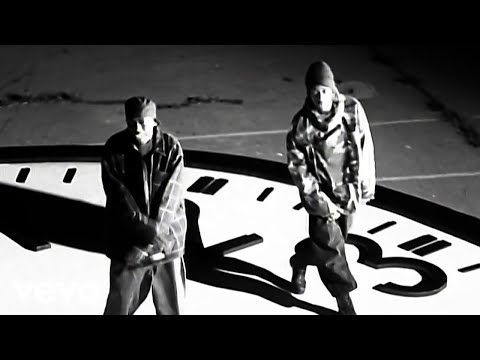
Released in 1995, Liquid Swords draws heavily on the iconography and sonic signatures established on Enter The Wu-Tang (36 Chambers), which dropped almost exactly two years earlier. GZA’s debut album is packed with samples sliced from kung-fu movies and references to martial arts violence, and most of the guest verses are provided by Wu-Tang alumni. But there’s nothing derivative about Liquid Swords. RZA’s beats are denser and more ambitious, and – unconfined to single verses – GZA is able to fully indulge his lyrical genius, unleashing clever wordplay and razor-sharp rhymes with the deadly precision of lyrical shurikens. Wu-Tang’s members all resolutely insist that they’re at their most potent when rapping together, but if there’s an album that comes close to overshadowing the group’s collective work, it’s Liquid Swords.
Raekwon – Only Built for Cuban Linx

Although it’s Raekwon’s name on the cover, Only Built for Cuban Linx belongs almost as much to Ghostface Killah, who appears on 14 of the album’s 18 tracks. The pair’s chemistry provides the record’s driving force, with tales from the street and reflections on ill-gotten gains swapped over beats, which – while somewhat more polished than those of Enter The Wu-Tang – still have RZA’s sinister fingerprints all over them. Raekwon would later describe the album as an exercise in perfectionism; given how well it holds up more than three decades after its release, it’s safe to say this approach paid off. Although fans like to argue about the best albums released by individual Wu-Tang members, there’s near-unanimous agreement that Only Built for Cuban Linx belongs near the top of the list.
Ghostface Killah – Supreme Clientele

While most of Wu-Tang Clan’s output is drenched in the oppressive atmosphere of Staten Island’s grimy streets, Supreme Clientele was conceived in a very different environment: a mud hut in the remotes of rural Benin. Ghostface Killah had travelled to the West African nation in the late 90s, believing he was dying of cancer (it turned out to be severe diabetes) and seeking traditional remedies. During his time there, while taking herbal medications prescribed by a bush doctor, he experienced a “cultural and spiritual awakening,” sowing the seeds for what remains his greatest album. Supreme Clientele is nothing short of dazzling, with Ghostface packing his bars with rhyme schemes so dense it’s almost impossible keep up on first listen, while many of the instrumentals have a distinctly ethereal flavour. The combined effect is an unshakeable feeling that what you’re listening to is revelation in the form of rap.
Method Man – Tical 2000: Judgement Day

It could be argued that on Method Man’s first solo outing, 1994’s Tical, the rapper was resting on his Wu-Tang laurels. In fact, given that the album opens with the legendary “I’ll let you try my Wu-Tang style” sample, it would be harder to argue that he wasn’t. But by the time the Ticallian Stallion released the album’s sequel – Tical 2000: Judgement Day – it was clear he’d forged an artistic identity entirely his own. Although all of Method Man’s trademarks are on full display – the infectious, lilting flow, the dense rhyme schemes, the bleakly twisted sense of humour – they are deployed in entirely original ways. Wu-Tang members are also, for the most part, conspicuously absent from the project, with guest verses instead provided by Lisa “Left Eye” Lopes, Redman, and Mobb Deep.
RZA – Digital Bullet

RZA will always be remembered as the mastermind behind Wu-Tang Clan, and there’s no doubt about his inclusion in the pantheon of hip hop’s greatest producers. However, while he might be more comfortable behind the boards, RZA is also a formidable force on the mic, as he’s repeatedly demonstrated with albums released under his Bobby Digital alias. Of these, Digital Bullet goes the hardest. Released in 2001, the record is immensely ambitious (not that you’d expect anything less from The Abbot), held together by a narrative arc that sees its protagonist starting to recoil from the excesses of the rap scene as his capacity for introspection grows. The subversion doesn’t end there, with RZA meticulously deconstructing hip hop’s sonic conventions – including those that he’d established himself.
Masta Killa – No Said Date

Between the cover art of No Said Date and the title of the album’s intro (‘Born Chamber’), it’s clear that Masta Killa was happy to cash in on his Wu-Tang bonafides when the record was released. And who could blame him, given the part he played in turning the group into a genuine cultural phenomenon. Once you get past that intro, however, it becomes strikingly clear that Killa had no interest in following the Wu-Tang formula. Atmospherically, the record is a sharp departure from both Enter The Wu-Tang and Wu-Tang Forever, with the instrumentals more suspenseful than outright ominous. No Said Date also devotes considerably less lyrical bandwidth to tales of hustling and street life, with Killa’s verses instead tearing down America’s public education system, revealing the insecurities he had to overcome on his journey to becoming an acclaimed MC and exploring the tempestuous highs and lows of romantic relationships.
Inspectah Deck – The Movement

Inspectah Deck’s second solo record, The Movement is probably the closest any Wu-Tang member has come to sounding genuinely uplifting. There are still references to gang life and street violence aplenty, but they’re less darkly specific than those found on other Wu-Tang records, and Inspectah Deck seems more interested in chronicling how he beat the odds to become one of the most successful rappers in America. But while the subject matter might be less visceral than Wu-Tang fans are used to, that doesn’t mean the rhymes are any less impactful. Inspectah Deck has always been one of the more technical Wu-Tang rappers (arguably second only to GZA), and on The Movement it’s clear that he’s operating at full confidence, delivering dizzying rhyme schemes and multilayered wordplay with a relentless energy that perfectly compliments the album’s upbeat, triumphant instrumentals.
Ol’ Dirty Bastard – Return to the 36 Chambers
![Ol' Dirty Bastard - Brooklyn Zoo (Official Video) [Explicit]](https://i.ytimg.com/vi/GRblYfKwa88/0.jpg)
Part performance artist, part folk hero, Ol’ Dirty Bastard was simultaneously the least lyrically gifted member of Wu-Tang Clan and the most entertaining. In all fairness, lyrical talent was something he never seemed particularly interested in chasing, instead channeling his raw, unhinged personality with a sing-song style of rapping that remains instantly recognisable more than two decades after his tragic death at the age of 36. That personality shines throughout Return to the 36 Chambers, with Ol’ Dirty Bastard’s rambling, stream of consciousness bars frequently culminating in bizarre punchlines, epitomised by the oft-quoted “I drop science like Cosby dropping babies” (‘Brooklyn Zoo’). RZA’s beats are (almost) as demented, and, while Return to the 36 Chambers might not be the most coherent Wu-Tang record, it’s easily one of the most memorable.
Cappadonna – The Pillage

Cappadonna has been consistently prolific over the course of his career, releasing somewhere in the region of 25 albums, depending on whether or not you count mixtapes and collaborative efforts. For our money, however, Cappadonna’s best work can be found right at the start of his discography. Released in 1998, at a time when Wu-Tang Clan was singlehandedly reinventing the possibilities of rap, The Pillage is gritty in every sense of the word, its instrumentals riding over crunchy drums and audio artefacts so loud they’re occasionally distracting, while Cappadonna shares glimpses into the starkness of life in Staten Island’s underbelly. RZA and Ghostface Killah handled executive production duties (RZA also contributed some beats), and it’s clear that The Pillage is fuelled by the same mixture of defiance and ambition that propelled Enter the Wu-Tang to greatness.
U-God – Dopium
![U-God (of Wu-Tang Clan) - "Train Trussle" (feat. Ghostface Killah & Scotty Wotty) [Official Audio]](https://i.ytimg.com/vi/SH_xF9W9Mfo/0.jpg)
U-God only contributed two verses to Enter The Wu-Tang, mostly because he was in jail while it was being recorded, but he’s made up for lost time with dependably fiery performances on subsequent Wu-Tang records. He’s also released a slew of hard-hitting solo albums, including 2009’s Dopium, which many fans regard as the moment he finally found his own sound. And what a sound. U-God’s lazy cadence oozes confidence and gives breathing room to the multisyllabic rhymes he chains together, while guest verses from more restless Wu-Tang members keep the pace unpredictable . The instrumentals are also surprisingly experimental, often ditching the boom bap beats and menacing piano samples expected from a Wu-Tang record for four-to-the-floor drums and decidedly un-hip hop instruments like searing electric guitars and warm synths that would sound at home on a disco record.
The UK leg of Wu-Tang Forever: The Final Chamber tour kicks off on 17 March. Find tickets here