Theatre


Interview
Wendy & Peter Pan: “It gives girls permission to be angry about the fact boys never grow up”
Playwright Ella Hickson on adapting Peter Pan and giving Wendy Darling her due
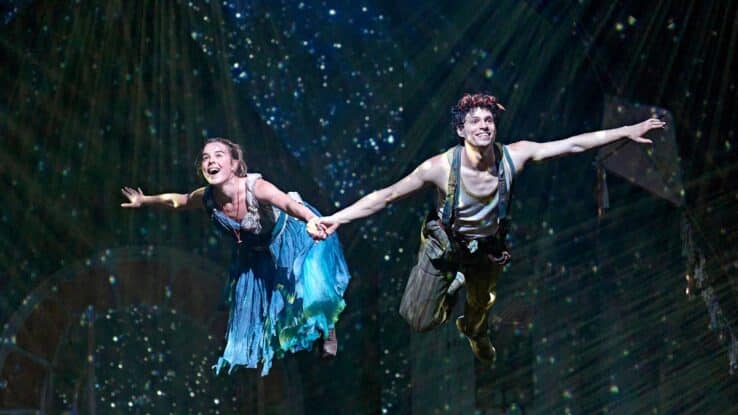
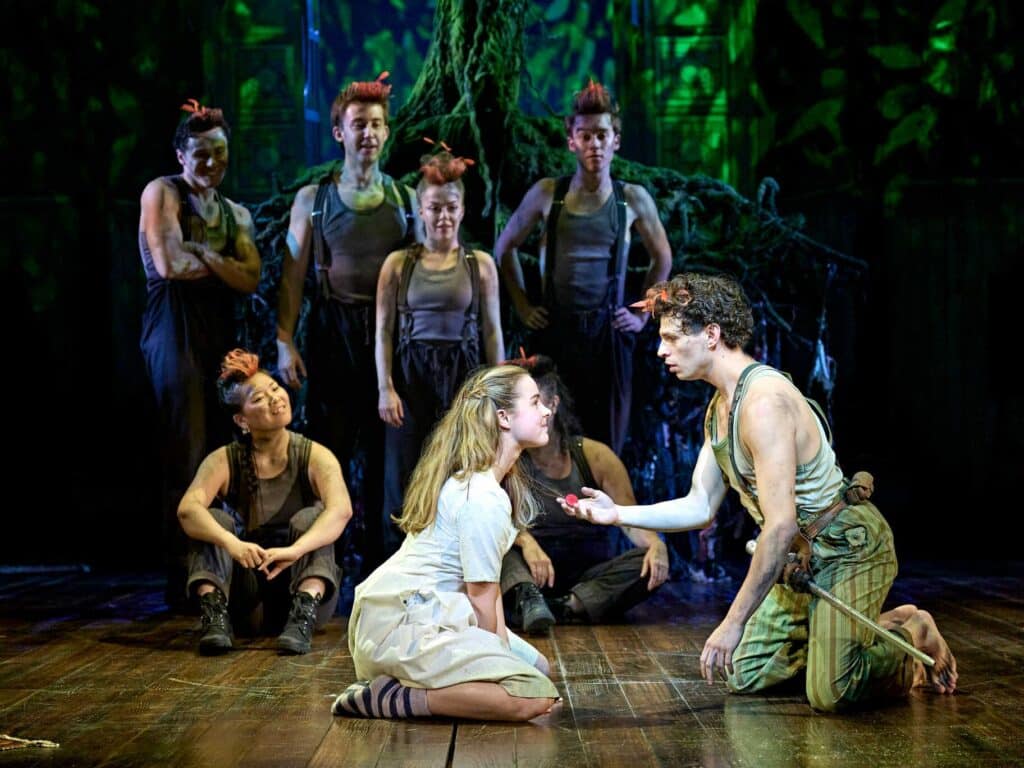
It’s been over a century since Peter Pan first appeared onstage, and over a decade since playwright Ella Hickson restructured the story around its real protagonist. Wendy & Peter Pan angles the spotlight away from the boy who doesn’t want to grow up and points it at the girl who inevitably will, in an adaptation that embraces both the magic and darkness of J. M. Barrie’s original story.
First appearing at the RSC Theatre in Stratford-upon-Avon in 2013, Wendy & Peter Pan has spent the last twelve years being revived again and again for productions in Edinburgh, Leeds and even Tokyo, before arriving this autumn at the Barbican Theatre in London.
“It feels strange not to be there,” says Hickson. She’s speaking from Harvard, where she’s currently researching a new play at the Radcliffe Institute. Being at Harvard is of course, in her words, “happy”, but with the same creative team returning yet again for the Barbican run, missing the opening night is bittersweet. “I sent them a bunch of flowers and got emotional writing the note…what I keep hearing from everybody is it’s one of the best productions that they’ve ever done.”
With Wendy & Peter Pan recently opening at the Barbican (you can read our review here), we caught up with Hickson to talk about why Wendy’s story needed an update, and what Peter Pan is really trying to tell us about aging.

One of the things that struck me as a kid when I read it, is that the idea of Wendy being put in that mother role while the boys are running around and having a good time – you feel the injustice of that as a little girl
That’s how I felt when I first read the story. I thought, the one thing that really needs doing here is we need to sort out is Wendy’s character. She’s central to the story, her arrival is the inciting incident – without her nothing would change. But she has a terrible trajectory, all the girls hate her and try and kill her, and all the boys do is want her to be mum and to make breakfast. I feel like she was due an update.
What did you want your version of Wendy’s story to be?
I think joyful for sure. I really relish the opportunity to write something that’s truly funny and joyful and is meant to bring joy and levity and heart into people’s lives. Then I suppose just the same thing I do with every project, which is I want it somehow to give you permission to feel… I don’t know quite how to explain it… to feel less odd for your odder feelings, or to sort of remove the shame from them.
There’s a bit in the play where Wendy is talking a lot about the fact she finds it very difficult to forget. She ruminates on things when Peter manages to forget all the time, and it’s sort of generally accepted, I think especially when you’re a teenager… I don’t know if this is true anymore, but when I was a teenager, it was definitely better to be sort of light footed, you know, to care less and to kind of think less, and to be fleet of foot. If you happen to be a Wendy where you are thinking about things over and over again and you can’t forget, then that’s okay too. There are just different ways of being and different ways of dealing with different ways of being, and they’re all the right thing. It’s always about permission, I think, when I’m writing something. To take the more difficult bits of who you think you are and to put some heart and humour and permission around them, and hopefully, therefore, you feel less alone. Because I guess that’s why everybody goes to the theatre or reads books, is when you find another human feeling, that echoes something you feel, and there’s community in your oddness for a second.

What you were saying about teenagers needing that, I think that’s actually arguably truer today than ever. We have quite an irony-poisoned younger generation and it’s nice to see your Wendy stand in contrast to that.
Yes, she’s full of heart, and she’s a big feeler and a big thinker, and she possibly makes slightly heavier weather of life than she needs to, but she’s also been through it, and I think that’s the other thing that the show is trying to say. I think those people that bear the world a little heavily are often the way they are because they’ve been asked to hold a lot. She takes emotional responsibility for a family that’s grieving. It feels very typical of young women to me and because she’s doing that, she finds it far harder to access joy. And what the play says is that joy is the healing power, you have to allow yourself joy again. Somehow her doing it lets her mum do it… it’s interesting, actually, because by letting herself off the hook and ceasing to take responsibility for everybody else, she actually does the thing she was trying to do by taking responsibility, which is she unlocks everybody.
Is that ever a daunting thing, trusting different people to bring this story to life? I suppose that applies across your career, but particularly with this show and this character that, as you say, you love so much.
I mean, with this show, no, because it’s Jonathan Munby and Jonathan Munby and I on this show are now one brain. I wake up at like, six because my kiddo is up – and I have a charming voice note from Jonathon Munby, who’s already at lunchtime in rehearsals, and he’s got questions. It’s a treat to hear from him.
We first did the show in 2013, so we’ve been at this for over 10 years. I adore them all, and it’s been a wonderful time every time. It’s so weird getting older with this crew of people because we’re doing a show about growing up. When we first did the show, I must have been in my early 30s. But all of us, we were such a gang for that first outing. And now, Fiona Button (the original Wendy) and Tink (Charlotte Mills) and I all have kids. We all started at it from Peter or Wendy’s point of view and then you come back and you’re like, “crikey, I’m worried about getting old, and tick tock, tick tock.” That’s gorgeous and lovely and makes it even more of a special thing to do a show like this with a group like this. That is not typical of all creative processes.
How lovely that this has been the production that’s kept coming back, then.
Although, I think those two things are… I always think they speak to each other. You know, it’s rare that you would have an absolute hell show that just keeps coming back because no one wants to do it. And then I feel like the audience can feel that as well. Usually, if people are having a nice time on stage, you can feel it in the audience and the reverse.
A lot of your work has been on original plays – thinking back to when you first wrote this adaptation over a decade ago, how was that process different?
I mean, it’s different because there’s just more to hang on to. I mean, the original play of Peter Pan definitely has its faults. Peter Pan as a protagonist, is famous for never being able to remember anything and for not changing. So as far as dramatic protagonists go, that’s a terrible combination of things. But with adaptations, on the whole, you can relax a little bit about structure, because usually you’re adapting it because it’s good in its first incarnation. If it operates structurally in a successful way, then you can use the structure. I went back to the book more than the play in this adaptation -he talks a lot about the smallest star in the sky in the book, it seems to carry meaning – and that was the birth of Tom, the character that I’ve invented that then doesn’t survive. The book and the play are so much about grief, because the idea is all of the Lost Boys are dead, but somehow you don’t really access that when you read the original, to I wanted to bring that to the fore.
Why Peter Pan?
Well, the RSC asked me to – and what a treat to work with the RSC. It’s huge. It’s a thousand seat theatre, and you get to let your imagination run wild, because they’ve got a big toy box. They can fly people. If you put massive pirate ships in, they can build them!It’s a classic story and it’s truly magical – who wouldn’t want to adapt it.
Is there anything else that springs to mind that you would enjoy having the opportunity to adapt in the future?
I mean, more kids’ stuff. I’m furious that someone else just did The Faraway Tree, absolutely livid. Why didn’t I get the phone call? I’d quite like to do Little Women. The original Little Woman house is, like, ten minutes from me here, it was a great visit.
Why is it that Wendy’s story is a story that we keep coming back to?
I has really primal bones. It’s about age. It’s about not wanting to grow up, and actually that the only way that you can end up not growing up is to die. That’s sort of what the story is saying the whole time. The only reason Peter gets to be eternally young is because he’s dead. As much as it’s difficult and hard and there’s loss, growing older is a huge privilege. Not everybody gets to do it. And each one of those big changes is like such a… I don’t know, it’s such a courageous thing. You know, when you go through adolescence and you leave your family and you make new friends, and then when you find your person that you want to spend your life with, that’s courageous, that you trust someone. Then it’s courageous when you have children and these things, they’re terrifying steps into the unknown. And they’re not all pretty. They require great loss in order to sort of be refabricated on the other side. I think Wendy somehow understands that, and she knows it, because she’s had to go through it too young, in my version –she’s lost her brother, and when she looks at Peter, there’s an irritation with him. It’s not his fault. He’s dead. He can’t get any older, but she does. She grows up. She knows it’s time to go home and it’s time to leave Peter behind and it’s time to go to big school. I think that’s so universal. I think we all feel it, that’s the big deal in being human – you get to go on, and you get to go forward, but there are irredeemable losses along the way. That’s what this story does, is it holds those two truths about human nature in tension in a very honest way.
Wendy & Peter Pan is currently playing at the Barbican Theatre until 22 November – find tickets here