Theatre


Review
Review: Born With Teeth
Ncuti Gatwa and Edward Bluemel are too hot to touch in this fiery interpretation of Shakespeare and Marlowe
Marlowe was first suspected of collaborating with Shakespeare on Henry VI parts I, II and III as early as the eighteenth century. He’s now been recognised as a co-author, but the debate still rages – did he really have any involvement, or did he have far more involvement in far more of Shakespeare’s plays than we’re aware of? Liz Duffy Adams’ play is less concerned with the facts of history than the ‘ifs’. If Shakespeare and Marlowe collaborated on Henry VI, then why would one of the most successful poets of his age agree to work with an up-and-comer? If they were pushed into a room together, how would their geniuses collide? And if Marlowe looked (and flirted) like Ncuti Gatwa, how long would it take them to make out?
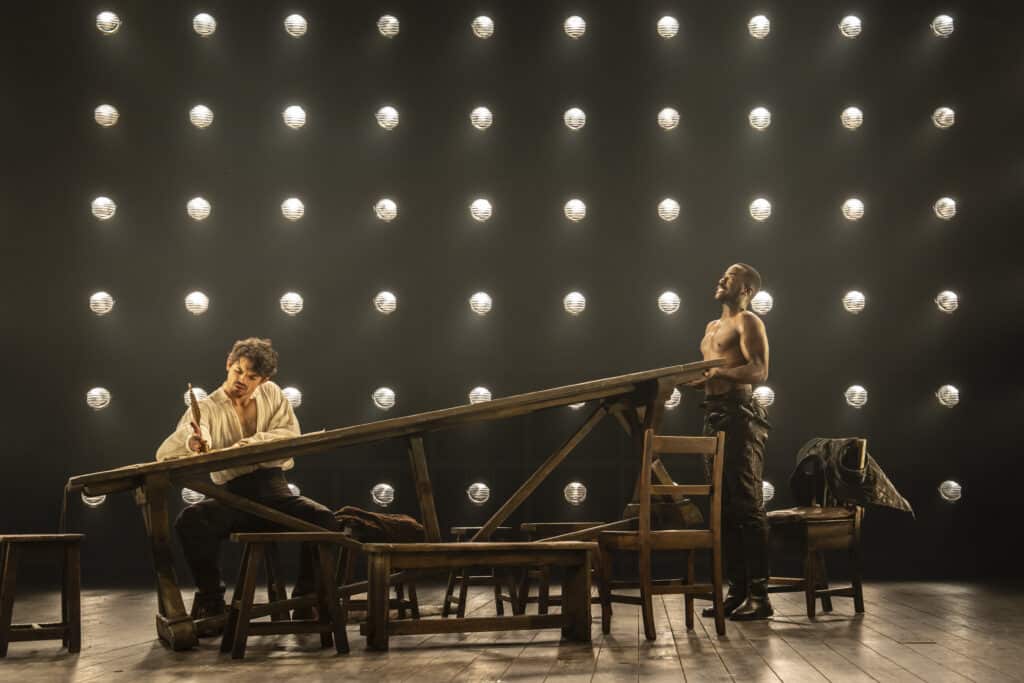
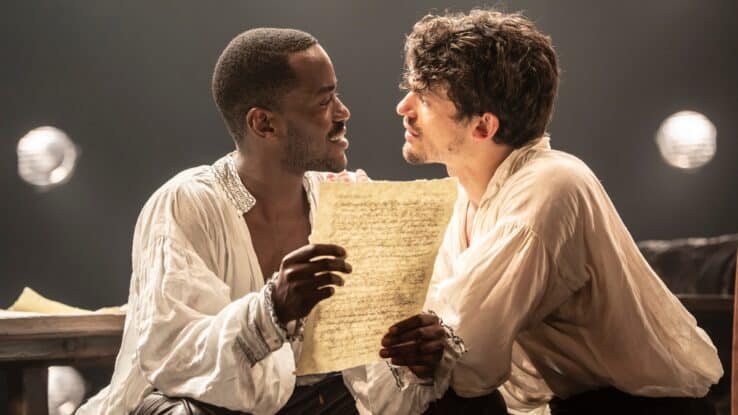
Born With Teeth is, for all intents and purposes, fanfiction. Gloriously so. At the height of religious paranoia, after a period of dizzying flip-flopping between Catholic and Protestant rule, Catholicism is now illegal again, and with it, all forms of atheism – a problem for the free-thinking Marlowe. In Adams’ play, this makes England akin to a police state, in which artists must act tactically to survive. Like Shakespeare, they could expertly pander to both the masses and the powers that be, or, like Marlowe, they could make powerful friends. As the two collaborate, a cat and mouse game ensues, with each trying to figure the other out. Gatwa’s Marlowe swans, preens, teases and strikes unexpectedly, whilst Bluemel’s Shakespeare fears distraction and wants to focus on the task at hand. However, both are young, queer and promiscuous, and distraction is inevitable.
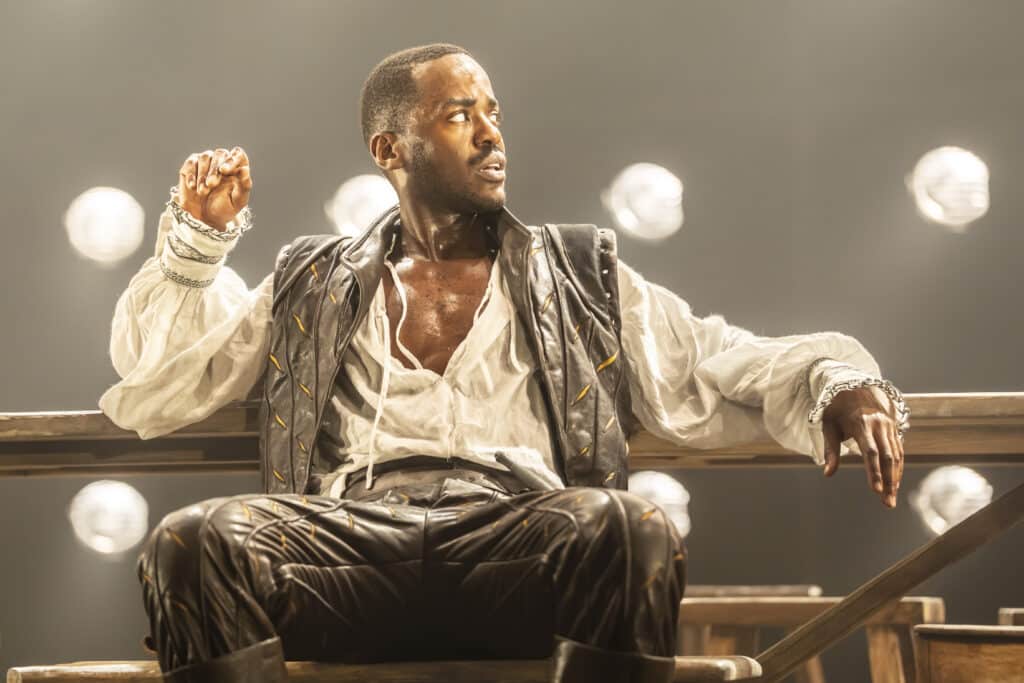
Adams’ dialogue is a delight, the kind of rhythmic back and forth that sings in the hands of two very capable actors. Marlowe and Shakespeare tackle love, sexuality, politics and religion with a blend of highbrow and lowbrow that is in itself a reference. There are some lines borrowed, of course, but it all feels impressively original. Gatwa is magnetic as Marlowe – always brilliant physically, he has permission here to dance, flirt, leap halfway across the stage. Bluemel as Shakespeare counters him beautifully. Early in the Bard’s career, he is young, idealistic, ambitious, still cautious. The two create a palpable chemistry, felt more in the moments of quick interplay than when they’re actually entangled on the table. Over it all hangs a fog of paranoia, and our foreknowledge of their respective endings.
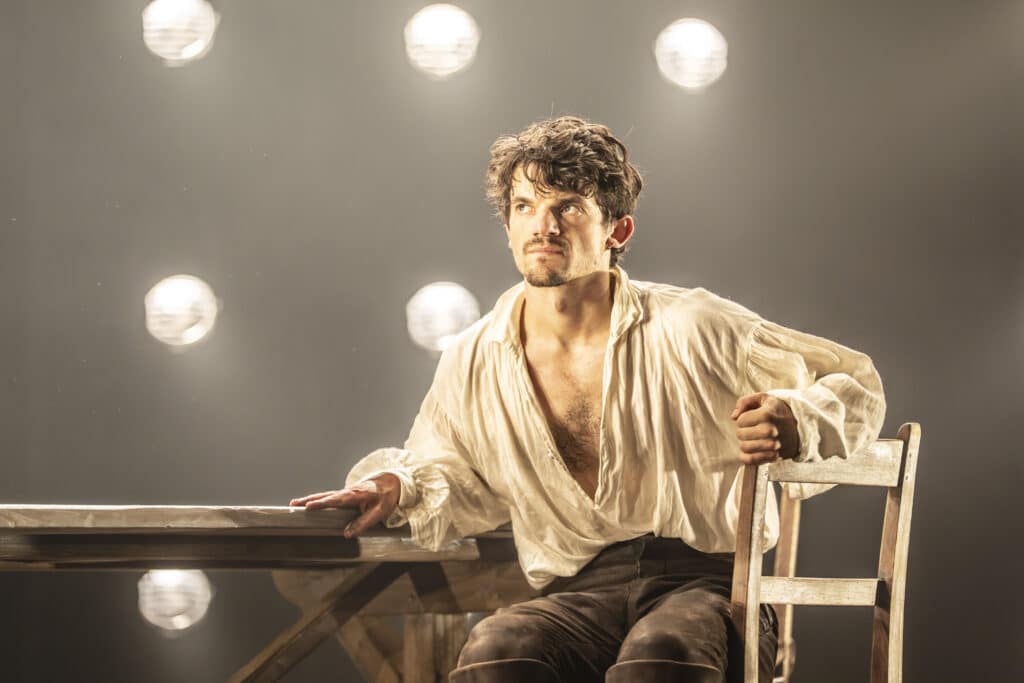
It’s redundant to say that any play about Shakespeare feels impressively modern – he survives because we still relate to him. But Born With Teeth offers a reminder that all genius exists in context and all art is tempered by politics. Prodigies like Marlowe can be killed before their time – Marlowe was reported to be just 29 when he was stabbed – and never get a fair shot at stacking up to their contemporaries. Great writers like Shakespeare may have to write around censorship, to edit themselves for popular opinion, rather than delivering what feels most honest. Adams’ play tackles these topics with deftness, wit and heart. To do the Shakespearean thing and pun – it bites.
Born With Teeth is now playing at Wyndham’s Theatre until 1 November – find tickets here

Photo credits: Johan Persson