Things To Do


Step Inside
Step Inside: The London Eye
Everything you need to know about the UK's most popular attraction.
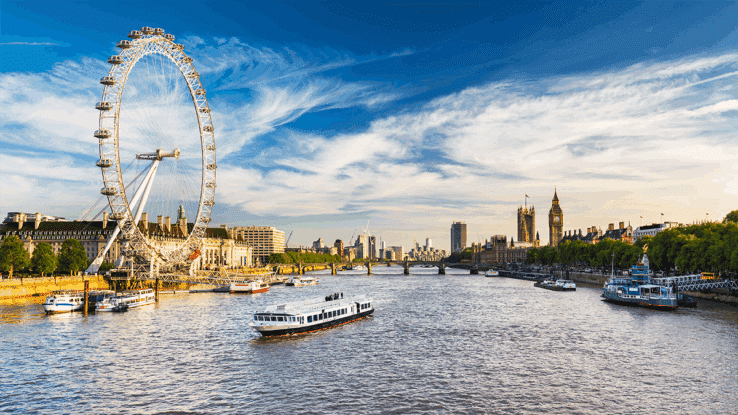
A dizzying monument to the dawn of the third millennium, The London Eye was only ever supposed to stand for five years before being dismantled. However, its popularity has proved so monumental and enduring – around four million people pay for rides each year, making it the UK’s most visited attraction – that the Eye has now become a permanent part of London’s skyline, as recognisable as The Houses of Commons, Big Ben, or any of the English capital’s other most beloved landmarks.
| Attraction Quick Facts | |
|---|---|
| Attraction Name | The London Eye |
| Location | South Bank, London |
| Parking Information | Paid parking is available nearby at Q-Park Westminster and Waterloo Car Park, although it’s usually easier to take public transport |
| Address | Riverside Building, County Hall, Westminster Bridge Rd, London SE1 7PB |
| Phone # | 020 7967 8021 |
| Capacity | Up to 800 visitors at a time (25 per capsule across 32 capsules) |
| Opened | March 9, 2000 |
| Architect | David Marks and Julia Barfield (Marks Barfield Architects) |
| Website | londoneye.com |
London Eye History
In 1989, David Marks and Julia Barfields quit their jobs as corporate architects and launched their own firm, motivated by a desire to escape the drudgery of the rat race and spend more time with their newborn child. Well-paying gigs proved unexpectedly scarce, and in 1993 – in dire need of some free publicity – the couple decided to enter a competition organised by the The Sunday Times and the Architecture Foundation to design a monument marking the start of the third millennium. The design Marks and Barfields submitted was for a 440-foot wheel, perched on the bank of the Thames, which would delight passengers with panoramic views of London and attract tourists from around the world (while avoiding comparisons with the Eiffel Tower).
When the competition ended without a winner (the organisers didn’t find any of the designs particularly compelling), Marks and Barfields – who had already been assured of the wheel’s plausibility by structural engineer Jane Wernick – decided they weren’t ready to abandon the project. After remortgaging their house, the couple applied directly to Lambeth Council for outline planning permission and went to the media, resulting in the Evening Standard’s “Back the Wheel” campaign, which swiftly attracted substantial support from the public. The final piece of the puzzle fell into place when British Airways exec Bob Ayling convinced the airline to stump up £600,000 for the project. Planning permission was granted in 1996, and – although British banks declined to finance the Eye – the rest of the funding was provided by the German bank Westdeutsche Landesbank and the Japanese multinational Sumitomo Corporation. Construction began in 1998, and on 31 December 1999 The London Eye, then going by the name The Millennium Wheel, was ceremonially opened by Tony Blair.
Building the Eye
The contract for managing construction of The London Eye was awarded to Mace, the same firm that would go on to oversee construction of The Shard. Before work on the actual wheel could commence, alterations had to be made to the bank of the Thames so that deep concrete foundations could be poured into the riverbed. This immensely complicated part of the project was handled by the maritime engineering firm Beckett Rankine. The main steelworks were handled by the Dutch firm Hollandia, with Mammoet (also Dutch) drafted in to erect the wheel once it had been constructed.
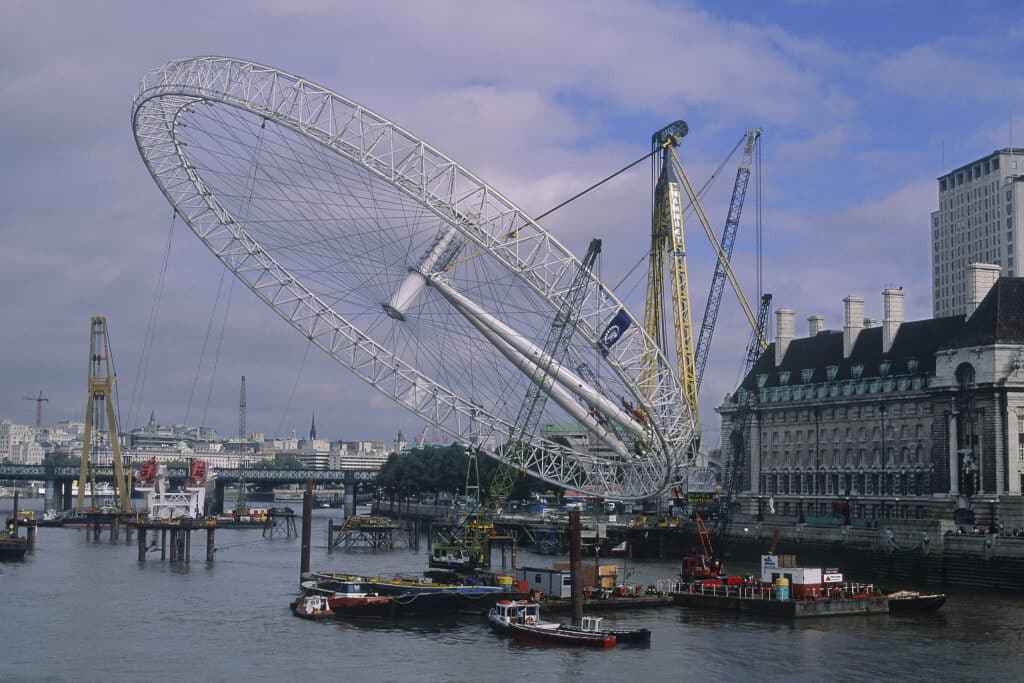
The components of the Eye were constructed offsite and transported up the Thames on barges. This, too, proved to be an incredibly complex endeavour, requiring Tower Bridge to be raised so that the largest sections could get through. The Eye was then assembled in a horizontal position, supported by moored floating barges. The central hub was installed first, followed by the steel rim, with tensioned steel cables then attached to connect the two. Once this stage was complete, the Eye was hauled into an upright position by hydraulic jacks at a rate of two degrees per hour. It was left at a 65-degree angle for a week while engineers prepared for the next phase of the lift, attracting a steady stream of crowds who came to gawk at the sight of a 440-foot steel wheel dangling precariously over the Thames. After this interlude the Eye was hoisted into its final, vertical position, and the 32 capsules – which had also been manufactured offsite – were attached over the course of eight days.
Design
Although The London Eye is no longer the world’s largest ferris wheel (it lost that title to China’s Star of Nanchang in 2006), it is the world’s largest cantilevered observation wheel, thanks to its unique design. In case your knowledge of engineering terms is a little rusty, a cantilever is a structure that is fixed only at one end, and in the case of the Eye it takes the form of an A-frame that serves as the wheel’s sole support. Tensioned cables radiate from the rim of the wheel to the top of the A-frame, giving the Eye its distinctive bicycle wheel appearance. This innovative design evenly distributes the load, maximising comfort for those inside the viewing capsules attached to the outside of the rim. Each of those capsules is completely enclosed and air-conditioned, with automatic climate control ensuring pleasant temperatures for passengers, no matter the weather. They’re also fitted with individual electric motors that gradually rotate as the wheel turns, keeping passengers upright throughout the ride.
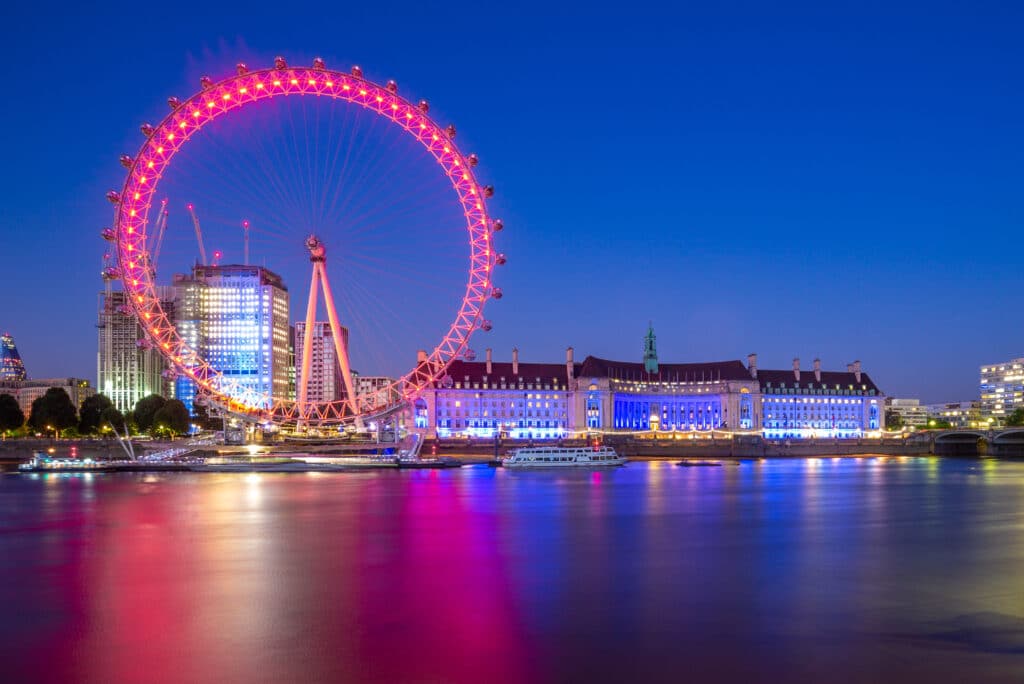
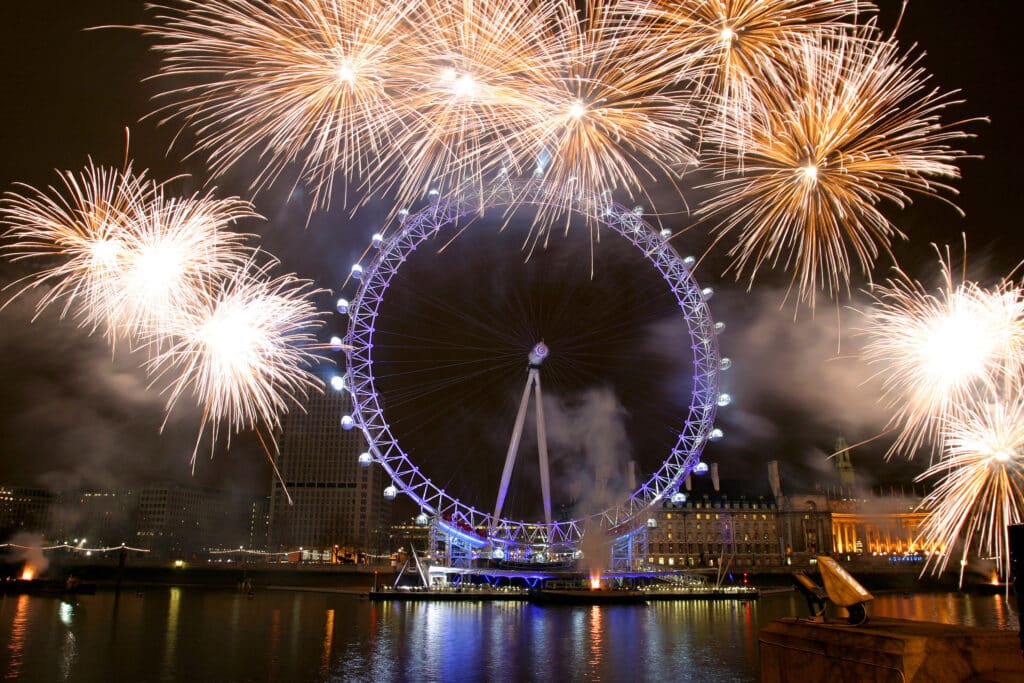
In 2006, the Dutch firm Color Kinetics was hired to redo the Eye’s lighting, installing LEDs that could be digitally controlled. Ever since, the Eye has played a central role in London celebrations, displaying dazzling light shows synced up to the fireworks that are launched from on and around its frame.
How to buy tickets for The London Eye
Although you can buy tickets at The London Eye’s admissions office, it’s always better to purchase them in advance. This will save you queuing time, get you the best possible price and – most importantly – ensure you don’t experience disappointment on the day due to sold out tickets. There are also a range of Fast Track tickets available, including flexible options which allow you to skip the queue without tying yourself to a specific time-slot.
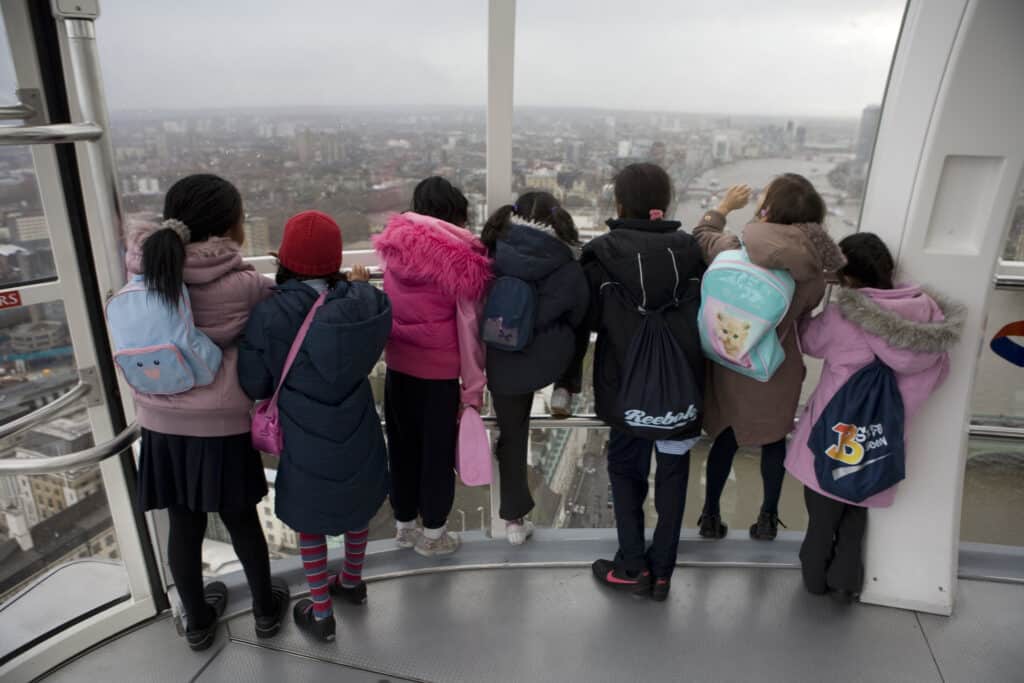
Ticket prices vary depending on the time, day and whether or not the date falls within a holiday, but kids under three always go for free. Finally, if you’re feeling particularly flashy, it’s possible to book an entire pod for up to 25 people, with this option including a range of VIP perks.
Book tickets for The London Eye
How to get to The London Eye
The London Eye sits on the South Bank of the Thames, within walking distance from several major transport hubs. If you’re taking the tube, the closest Underground stop is Waterloo, just a five-minute walk away, which is served by the Bakerloo, Jubilee, Northern and Waterloo & City lines. Other nearby tube stations include Embankment, Charing Cross and Westminster, all within a 10–15 minute walk. While these are slightly further away, they offer scenic routes across the river or along the Thames path.
A number of London bus routes stop near the attraction, with options including the 211, 77 and 381, all of which drop you off within a short walk of the Eye. For something a little more splashy, Thames river services glide right up to London Eye Waterloo Pier, so you can arrive by water and enjoy spectacular views of the London skyline as you approach.
Central London is within the Congestion Charge Zone, so driving to The London Eye can be costly and slow during peak hours, and there’s no visitor parking on site. If you are coming by car, there are several nearby options for parking, including Waterloo Carpark, Q-Park Westminster, Car Park South Bank, and National Theatre Car Park, but these tend to fill up quickly.
Food and drink options around The London Eye
South Bank is packed with options for food and drink, with a wide range of restaurants and bars catering to every taste and preference. Nearby crowd pleasers include Honest Burgers South Bank, Giraffe, Flat Iron, and Wahaca. If your trip to The London Eye is part of a special occasion you might want to check out Skylon, a modern European restaurant and bar offering floor-to-ceiling views over the Thames. For more intrepid foodies, Southbank Centre Food Market – open Friday to Monday – is a reliable source of seasonal, delicious street food.
Accommodation around The London Eye
If you’re visiting London and want to stay near The London Eye, there are a number of options to suit all budgets. Hotels near the Eye include the London Marriott Hotel County Hall, Premier Inn London County Hall, Park Plaza County Hall London, and Hampton by Hilton London Waterloo. There are also plenty of Airbnbs and other short-term rentals with good availability in the area, although prices tend to skyrocket during school holidays and other peak times.
Frequently asked questions
A ride on The London Eye takes around 30 minutes.
Queuing times for The London Eye vary significantly depending on the time of day and season. At peak times the wait for a standard ticket can be well over an hour. To avoid excess queuing times, always pre-book (Fast Track tickets can also be purchased).
The London Eye is open from 10 AM to 8:30 PM in summer (June-August) and 11 AM to 6 PM in winter. These hours are often extended on weekends and during holidays.
32.
The London Eye is owned by Merlin Entertainments, which also owns and operates a number of other attractions including Thorpe Park and Madame Tussauds.
Yes, it is cheaper to buy tickets in advance.
The London Eye is 443-feet tall (135 meters).
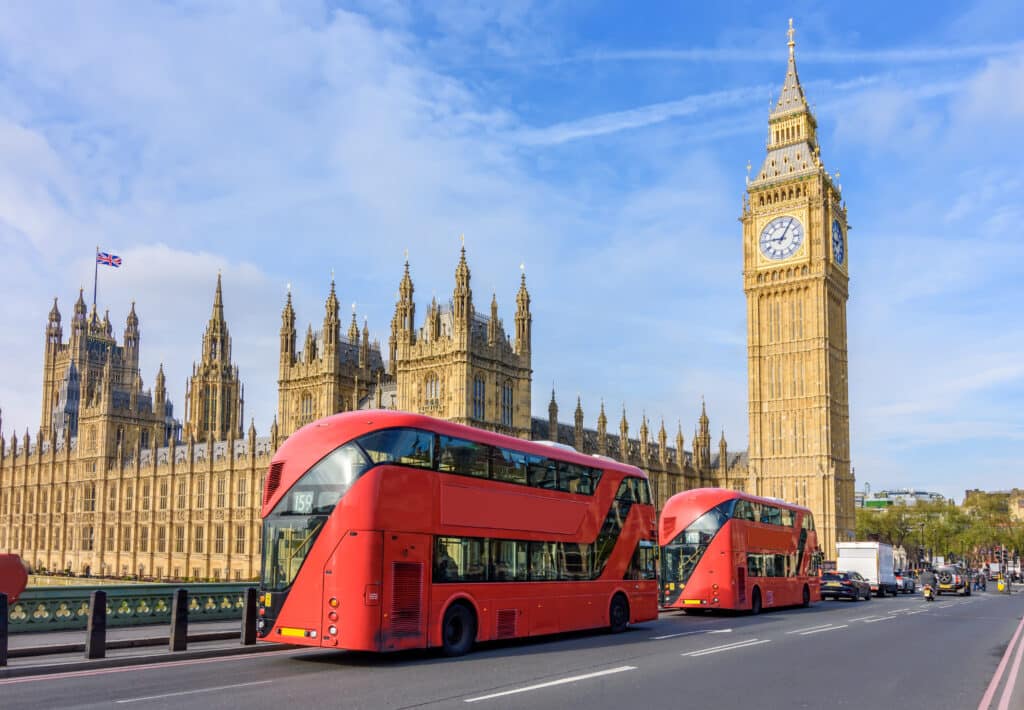
The London Eye sits on the South Bank of the Thames, directly across the river from the Houses of Parliament. It is in the borough of Lambeth.