Review


Review
Review: Hadestown
Anaïs Mitchell’s spectacular Greek myth retelling at the Lyric Theatre is a love letter to the bardic tradition
All love stories end tragically, Hermes reminds us in the opening number of Hadestown. The story of Orpheus and Eurydice is more tragic than most – and far more frustrating, as the tragedy feels so avoidable. Retrieving his lover from the underworld, Orpheus is given a simple instruction by Hades: don’t turn around to look at her until the walk home is complete. Inevitably, he does, and she’s lost.
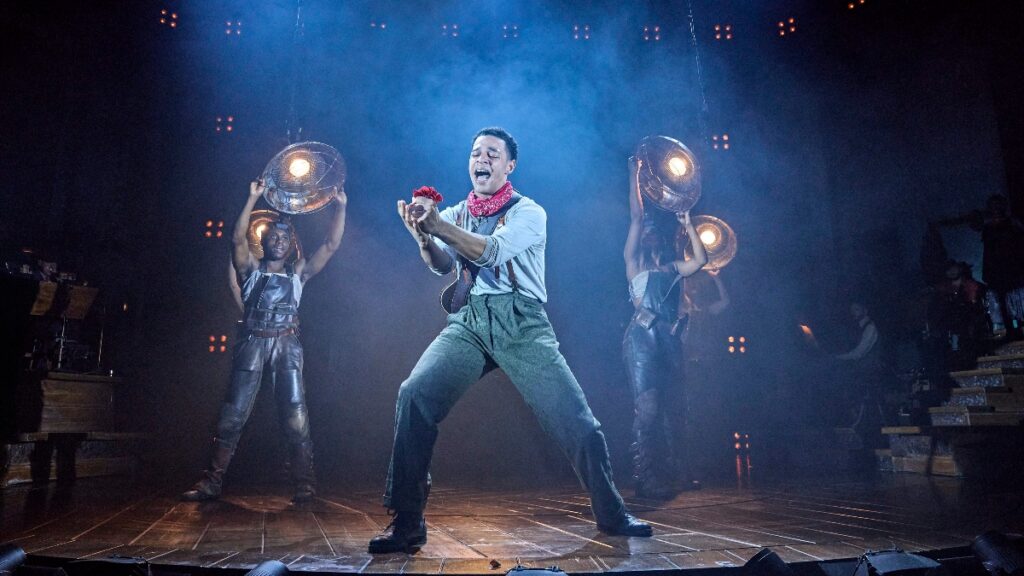
Anaïs Mitchell’s folky retelling doesn’t, as many adaptations have, try to offer a concrete explanation as to why Orpheus does what he does. There’s some half-hearted hope offered up top by Hermes – “Maybe it will turn out this time” – but the majority of us have walked into the Lyric Theatre knowing exactly how it ends. In Mitchell’s version, futility is the point.
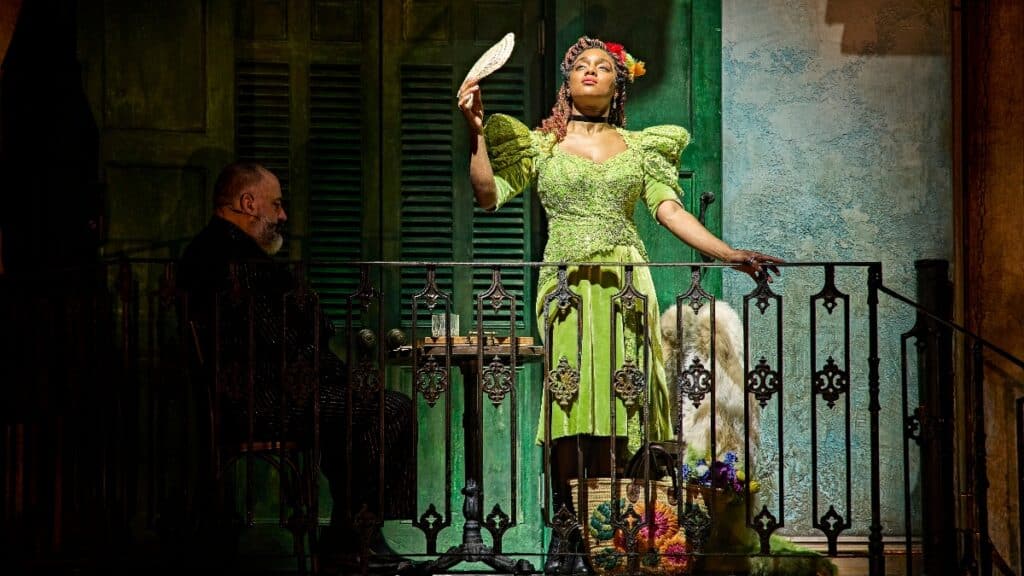
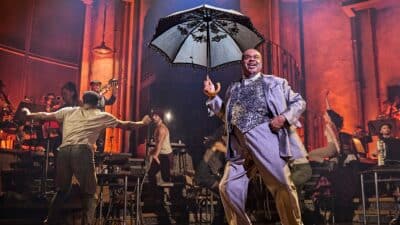
Mitchell’s Hadestown reimagines the underworld as the hellcentre of capitalist industrialism, overseen by Hades, an oil tycoon in a sparkling pinstripe suit. There are shades of Trump and Musk to him, but ultimately he’s a strange kind of everyman, Mitchell’s warning that any of us could become him under the influence of power, greed and loneliness. His failing marriage to Persephone causes him to turn Hadestown into a “gilded cage”, creating an illusion of success to combat his inadequacies. The more unsubtle elements of his character – including a number titled ‘Why We Build The Wall’ – don’t detract here, in a world of allegory where the lesson is always heavily signposted. Mitchell’s ability to stay true to the traditions of Greek myth whilst creating something that feels entirely modern and fresh is an extraordinary balancing act.
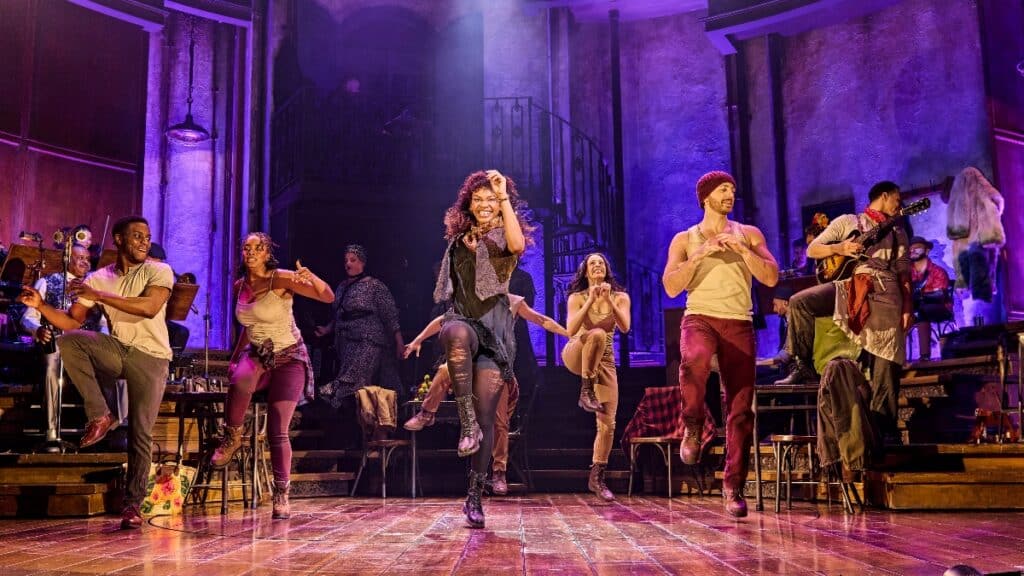
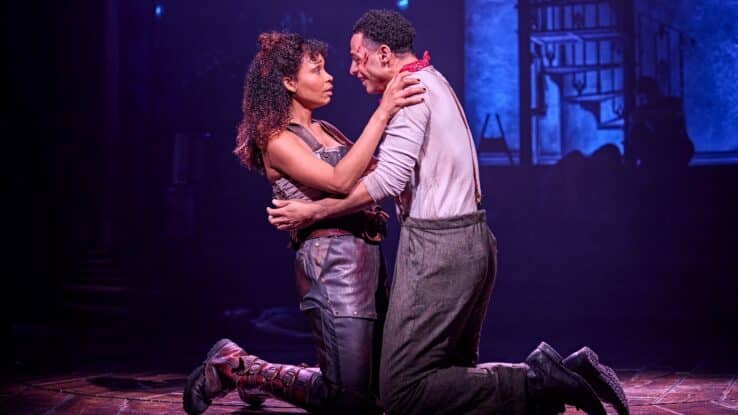
Mirroring Hades and Persephone are Orpheus and Eurydice, the young couple struggling to survive only on love and poetry. It’s to the promise of food and shelter that Orpheus will eventually lose Eurydice – and it’s Orpheus’ shaken trust that likely causes him to give her up again. Director Rachel Chavkin does much to build these relationships in just over two hours, creating small interactions and moments of intimacy that say a lot with a little.
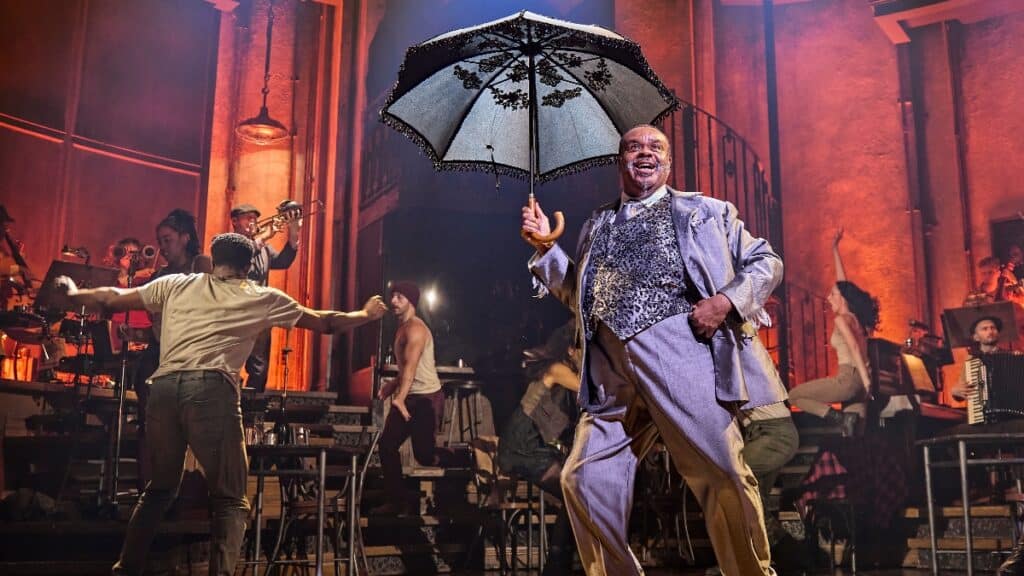
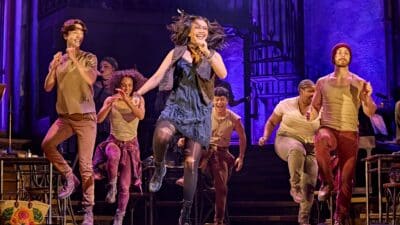
Hermes is our bard, narrating the story, whilst the Fates reinforce that what has been will always be. A small chorus of workers and an on-stage band complete the cast, weaving the tale from a taverna space created by Rachel Hauck that opens up to reveal the steel of Hadestown – a true piece of stage magic. A revolve sets Orpheus and Eurydice on their walk. It’s as grand and sweeping as any tragic love story deserves to be – and well worthy of its slew of awards – but it’s still possible to imagine singer-songwriter Mitchell composing the entire thing from her guitar. It’s these bardic roots that make Hadestown so affecting. As Hermes reflects on the story that’s just played out and prepares to set it going once again, he reminds us that nothing that happened here was a surprise – not to the players onstage, and not to us in the audience. The joy is in the telling, and Hadestown is decidedly a joy.
Hadestown is currently playing at the Lyric Theatre – find tickets here