Music


Plus One
The 11 best Gary Numan songs
Why have a Top Ten when you can have one more? Let 'Numania' ensue with Gary Numan's greatest songs, ranked
It’s not always easy blazing a trail. Disrupting the status quo was never meant to be plain sailing. Nowadays however, innovation is widely accepted in the music industry as a characteristic that’ll make an artist sound out from the ever-expanding crowd.
But when Gary Numan crash-landed into the pop charts with the Tubeway Army back in 1979, his glaring differences to the kind of tried-and-tested types of musicians that came before him put a target on his back. Despite almost instant commercial success with a slew of hit singles, Numan’s fractious relationship with the music press pushed him to the brink of self-destruction.
After years in the wilderness (“my career nose-dived” he told us frankly in 2024) typically, Gary Numan’s earlier body of work was rightly reappraised by the masses. Dismissed as David Bowie-lite, critics en masse weren’t prepared for his sleek, robotic stylings to challenge the stranglehold of rock or to usher out the raw frenzy of punk music at the tail end of the 70s. But albums like Replicas with Tubeway Army, The Pleasure Principle and Telekon have gone on to be hugely influential, altering how electronic music converged with popular culture throughout the subsequent decade.
Shaping synth-pop as we know it whilst spawning sub-genres like dark wave and industrial rock (to which Nine Inch Nails’ Trent Reznor credits Numan as ground zero), he’s also been namechecked and sampled by artists as far-reaching as Prince, The Prodigy, Kanye West, Queens of the Stone Age, Poppy, RZA and J Dilla. As unlikely as that might sound, there’s ‘Numanoids’ everywhere you look – and his fans are as loyal as they come.
Gary Numan touches down at various stages around the UK this summer, including a huge outdoor date at Crystal Palace Bowl. No better time then to delve into the electronic rock kingpin’s vast back catalogue and decide on his very greatest songs. Agree or disagree with our ranking, let ‘Numania’ take hold regardless.
11. ‘My Name Is Ruin’

(Savage (Songs From A Broken World), 2017)
The pinnacle of Gary Numan’s post-apocalyptic concept album era, his 2017 album Savage (Songs From A Broken World) made an unlikely return to the upper echelons of the UK album charts, marking a strange full-circle moment for an artist that was written off for the most part of his music career. Making a scorching statement about our world sleepwalking towards total desolation in the wake of Global Warming, stand-out single ‘My Name Is Ruin’ is as searing as it gets.
10. ‘This Wreckage’

(Telekon, 1980)
The opening track to Telekon – the final in his trilogy of landscape altering albums which all peaked at number one in the UK charts – throbs and swirls nauseatingly throughout, as though the “machine” he embodied throughout this creative era is plodding along, running out of juice at a worrying rate. In many ways it mirrors the young Numan, who himself was struggling to cope with life as an awkward pop star.
9. ‘RIP’

(Pure, 2000)
With contemporaries like Nine Inch Nails and Marilyn Manson praising Gary Numan for his influence, he made a quasi-comeback as a reinvented, reappraised industrial rock icon. ‘RIP’ was his return statement, proving he could rough-house with rock music’s biggest weirdos. Taking cues from his US peers in regards to the gothic theatrics, ‘RIP’ brought previous Numanoids back into the fold alongside a fresh batch of fans that would’ve been glued to their screens watching Kerrang! television on repeat.
8. ‘Films’

(The Pleasure Principle, 1979)
Credit to Cedric Sharpley and bassist Paul Gardiner whose motorik drumbeat (that sounds like an artificial lifeform’s interpretation of John Bonham’s handiwork behind the kit) and bulging bassline propels ‘Films’ into the not-so-distant dystopian future. Funnily enough, ‘Films’ helped lay the groundwork for another form of music that’d become the future: hip hop. Numerous New York crate-diggers sampled the beat during the genre’s infancy, notably RZA (when he went by Prince Rakeem) on ‘Deadly Venoms (Vocals Up)’.
7. ‘Music For Chameleons’

(I, Assassin, 1982)
Thanks to Alan Partridge’s nimble display on the air bass, ‘Music For Chameleons’ will predominantly – and perhaps unfortunately – be remembered in conjunction with the tactless television presenter’s sad state of affairs living out of his caravan whilst he unwittingly sabotages his own career. As unfashionable as Steve Coogan’s fictional character might have made the 1982 song, its funky-as-hell riff on the fretless bass is undeniably groovy. Not that Numan thinks so – he’s refused to play it live for over 40 years.
6. ‘Down In The Park’

(Replicas, 1979)
Like Black Sabbath on synths, this sludgy, extraterrestrial tune was the first composition Gary Numan wrote exclusively on keyboard, marking a giant leap (for music-kind?) into the future of synthesised music. The future occupies the dystopian lyrics of ‘Down In The Park’ too, where androids entertain spectators in a local park by killing fellow humans. An analogy for Numan’s own thoughts about his position as an entertainer, maybe.
5. ‘I Die: You Die’

(Telekon, 1980)
Numan’s relationship with the media was cold at best, but in reality, the press thrived on making his life a misery. ‘I Die: You Die’ was Numan firing back at his critics who wouldn’t have a day job without him. At times Numan did make it easy for them to tear him down, however – look up his infamous Wembley Arena show in 1982 for those that don’t know.
4. ‘Cars’
(The Pleasure Principle, 1979)
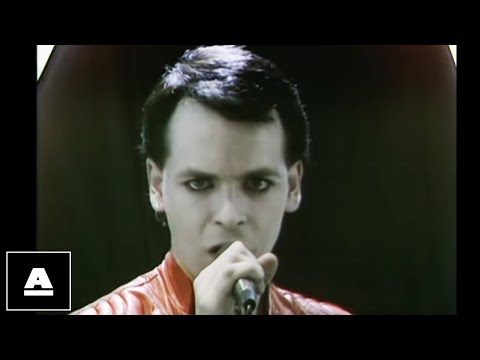
Alienation and an infatuation with technology are continuous themes in Gary Numan’s music, stemming from his autism (when it was diagnosed as Asperger’s syndrome) that left him feeling dislocated from societal norms. Relying on technology as a barrier to human contact became a necessity to Gary on one occasion, barricading himself in his car whilst bothersome onlookers peered through his window – he referred to the vehicle as “the tank of modern society.” The scenario inspired his robotic synth-pop classic ‘Cars’, his best-known song from his best-known album. It’s near impossible not to break out into ‘the robot’ when you hear that irresistible riff.
3. ‘M.E.’

(The Pleasure Principle, 1979)
Wait, is that Basement Jaxx’s ‘Where’s Your Head At?’ you hear? Yes sirree. There’s another pair of Numanoids to add to the list. Doomy synths ground ‘M.E’ in a despairing dystopian wasteland, a song from the perspective of the last Mechanically Engineered (hence ‘M.E.’) AI seeing their days alone as the world burns around them. Cheery stuff. But then, Numan was heavily influenced by sci-fi godheads Philip K. Dick and J. G. Ballard.
2. ‘Metal’

(The Pleasure Principle, 1979)
A synth riff that truly rips, ‘Metal’ literally sounds like gargantuan metal joints grinding and clanking against one another, a machine dismembering itself out of sheer frustration. ‘Metal’ is also one of Gary Numan’s saddest songs, oddly enough: a Pinocchio-esque tale about an android that wants to be human, said android could very well be Gary wanting to be like everybody else.
1. ‘Are Friends Electric?’

(Replicas, 1979)
It couldn’t be anything else. Innovative and evocative in equal measure, Tubeway Army’s ‘Are Friends Electric?’ placed Gary Numan – and his distinct monotone squawk of a voice – at the forefront of electronic music, which would swiftly revolutionise the entire music landscape. Where David Bowie experimented, Numan succeeded in bridging the gap to the mainstream. Despite no discernible hook, ‘Are Friends Electric?’ launched the fledgling musician directly into the limelight, peaking at number one in the UK. Critics instantly resisted, labelling Numan as a novelty act. More fool them: the song has stood the test of time, reaching a new and unsuspecting generation this century thanks to Sugababes’ superb sample in ‘Freak Like Me’. Instant success was amusing to Numan, who later admitted: “I had a number one single with a song about a robot prostitute, and no one knew.”