Music


Interview
My Greatest Hits: Ash
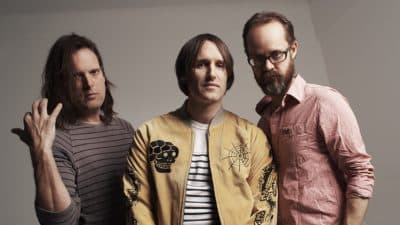
As the Belfast trio get set to celebrate 30 years of their debut album with a UK tour, bassist Mark Hamilton looks back on the band's career highlights
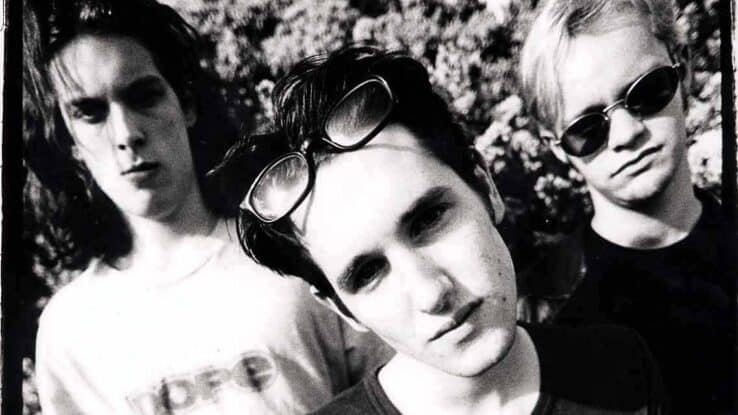
Ash were 15 when they formed. Much like many school-age bands, they played local gigs in small-town community centres and for friends’ birthday parties. Unlike the others though, they’d already been signed by the time they’d finished their A-Levels, with a Glastonbury headline spot not too far away. As bassist Mark Hamilton explains, “I think I’ve got the record for being the youngest person to headline the main stage”. Such a whirlwind rise brought the boys from Downpatrick to national attention, and with debut album’s 1977 blend of grunge, punk and pop, they produced one of the era’s defining records.
With an anniversary tour on the horizon, and 1977 set for its 30th anniversary reissue, we sat down with Hamilton to talk through the band’s career highlights, from their rapid ascent and the fickle nature of the music industry to pinch-me moments and following in the footsteps of heroes.

Early days in Downpatrick
I met Tim when I was 12 years old. I had just moved to Downpatrick and he was the second person I had met. Right away, we just hit it off as friends because we both loved metal. I think he had a W.A.S.P patch and I had an Iron Maiden one and we bought Kerrang! every week. Then a few years later, the whole grunge thing blew up. I guess the metal magazines also pivoted a bit towards that and there were a few bands in our school, who were older than us, who were playing more punk stuff, like Mudhoney and The Stooges. At that time, we were trying to play very complicated stuff because metal is quite intricate technically and difficult, so we were trying to go down one road and then we realised the technical side of things isn’t the most important – it’s more about the songs and the passion behind it. That was quite eye opening to us. It was like, oh, you don’t have to be able to play a thousand notes a second. That was a big thing for us to realise, it helped us really find our sound.
Influence-wise it was kind of a mix because Tim’s dad was like really big into pop music, like the Bee Gees and ABBA and The Beach Boys. So we were hearing this around the house, we’d hear a lot of real pop music, and we were also into the metal stuff and we were also getting turned on to the punk stuff. And then after Nirvana, who were our huge influence, bands like Weezer came, who blended bits of metal with pop music and guitar stuff. So we kind of found our lane around that way.
The early gigs
We did a lot of gigs! The only way of getting gigs at that age was to either put on shows yourself. We were extremely young, so we weren’t going to get booked by anyone to play anywhere proper – it was little community centres or town halls or back rooms of bars. If we could find out that other bands were playing we’d try and get on their bills and stuff like that. There was a good little DIY scene around Downpatrick and also in Belfast, so we played everywhere and anywhere we could.
Touring with Babes of Toyland and Elastica during school holidays
Once things started to build up in Northern Ireland and we’d also started playing shows in Dublin, we started getting a bit of a name for ourselves in Ireland. And then once that happened, we got to open for some international bands and British bands that were coming through. After those shows went well, then word started to spread to over the other side of the water. There was a guy who worked for Bad Moon Publicity who get sent a demo, and his office was next door to Tav, who became our manager – once those two got on board things moved quickly. But you also don’t have any real-world experience at that age, so you have no choice but to just go for it, you jump on and you go!
Releasing 1977 as teenagers
We’d done a mini album, Trailer, first and we’d kind of used up all of our songs on that. All apart from ‘Girl from Mars’, which we held back. We thought there was something special about that. And because we were still at school, we wanted to wait until we were able to go full time. So, when 1977 came out things had been gradually building up. We had put out like five singles before that album came out or five singles off the album and there were also three singles off Trailer. So things were, from our perspective, gradually building up, even though from the outside it might’ve looked like it was overnight. But, it’s still very weird. Things have just blown up at that point, with a number one album, and almost everybody wants a piece of it. So, we were on the cover of Kerrang, we’re on the cover of Smash Hits, the cover of Select, NME, Melody Maker. Basically all the music press across the board, so it was bizarre! There’s probably not many bands that would have been on the cover of Kerrang! and Smash Hits in the same month.
Was that the same year as the Glastonbury headline?
The first Glastonbury performance was ’95 and things really took off in ’96. We headlined in ’97; I think I was the youngest person to have headlined the main stage. We actually played Glastonbury again last year and we stayed for the weekend and it’s just got so big. It’s insane! It’s actually quite overwhelming how big it is. And then also at the time, Reading and Leeds were massive festivals. I mean, they’re still big, but I think they’ve kind of morphed into something different. But we knew the history of Reading. We knew the bands we’d followed, like Nirvana, and we knew how big a deal it was. And we knew that that was kind of the crowd that we felt most affinity towards, because it was that kind of music. Reading was one of, and still would be, one of the few shows that we would actually get nervous beforehand, just because of the history of the thing.
I mean, and then you go from, from this, from this like massive high, this like, I know you’re saying it sort of felt like a gradual thing, but from the outside, this sort of like overnight success, nuclear sounds, people are kind of then slating you very quickly. You change changes. It was, it was weird because at the time, you know, see, look back at it and sort of like say how it was slated.
Release of Nu-Clear Sounds
It’s easy to look back now and say that it was slated, but at the time the music press gave it good reviews. It was just that it didn’t connect. It didn’t sell like 1977. There was no sort of big radio single on it. I think the highest chart single was number 15 compared to the 1977 songs which were much bigger. So even though it was a gold album, it was comparatively a big step down. Right up until and when it first came out, everything felt good. You know, like the reviews in the NME and the broadsheets were all pretty positive. And also with Nu-Clear Sounds we were kind of reacting a bit. The record company wanted us to basically make the same album again, and we were not going to do that. If you tell a bunch of teenagers to do something, they’ll do the opposite!
Bouncing back with Free All Angels
The purse strings were drawn in after Nu-Clear Sounds was essentially a commercial, I use the word flop, and even if it wasn’t, at the same time they spent a lot of money on it and didn’t probably make it all back. And we were going from 1977 where we were the poster children of the label who could do no wrong, we were finding ourselves in a very different position. It got to the point where whenever we started doing demos for Free All Angels, that whenever we sent them the demos, they’d say oh, these aren’t good enough. But we believed in the songs. And we had a good relationship with Owen who was producing that record, so we played Owen the songs and he was like, they don’t know what they’re talking about, these songs are great! So, we went in and started recording some of the songs with Owen. One of the songs was ‘Shining Light’ and the label sort of changed their mind. Also, one of the songs got out early and our manager managed to get it on a playlist and then that made the label go oh! Record companies are very fickle – if something is hot, all of a sudden they’re going to jump on it again.
Did those experiences of the music industry influence the decision to stop releasing albums?
Well, that was more reacting to the environment at the time. Everything had moved to downloads, not even streaming. There was less importance put on the album format as a whole and it only seemed like individual songs were getting any kind of attention. It was almost like, what’s the point of an album? I think a few years later, everything’s sort of pivoted back, but at that moment, you’re looking at the landscape and going what do we do here? And then we ended up making essentially what was two albums out of that stuff anyway, because they were all put into compilations, so it was all a bit of messaging and bullshit. But there were 26 singles put out in a year, one every two weeks, which was a lot of work. We also did the A to Z Tour, which was played in places A to Z around the UK, which was really fun. And it brought us to different places that you wouldn’t usually play on a regular tour, so that made it very unique. I wouldn’t put it out of the realm of possibility that we would do something like that again. But I don’t think we’d commit to dropping 26 singles in a year. That’s just crazy!
Working with The Undertones
It was great working with them! We love them and they’re great people as well. And we ended up doing some shows with them as well around that time. They’re coming up on their 50th anniversary next year, which is amazing. They’re just this legendary band from the North.
I mean the whole punk scene, them and bands like Buzzcocks, kind of laid the foundations. And actually what was weird, was a couple of weeks ago we were playing with Public Image Ltd and watching John Lydon doing his stuff and you just don’t know who you’re going to get with him, but he was really nice. I think he plays a character. So if you get him when he’s not in character then he’s pretty cool.
Were The Undertones a childhood influence, especially being from The North?
When we grew up, we weren’t probably that aware of them, but we became more aware of them. I remember in school, there was a teacher of ours and I think Tim played him some demos and he goes, oh, you guys should really check out The Undertones, and we had no idea. But then listening to them, you definitely can hear it. It must be something in the water.
That must feel like a full-circle moment?
So much weird and insane stuff has happened to us over more than 30 years now, that whenever these magical things happen, sometimes you think that’s just the way it is, but then you do have to actually pinch yourself. Things like we were at Dave Grohl’s Halloween party at his house. And as 15 year olds went to watch Nirvana in Belfast and we had to hide round the back of the show for two hours to get autographs. So if you were to tell 15 year old us that we’d be doing that, we’d be going that there’s absolutely no way, what are you talking about!
30th anniversary of 1977
Every ten years you get the opportunity to do some sort of anniversary shows, and because these things only come around every ten years they’re worth doing – they always get a lot of people out and they’re always good fun! With the reissue of 1977 this time around there was one song specifically which we recorded at the time for 1977 and we’d done all the backing track but didn’t finish it, so Tim didn’t sing it but the song was essentially done and recorded. And we were trying to think if there was something we could do that would give this reissue purpose and there was this song. It took months to try and find the master tapes but once we did it was about finishing this long-lost 30 year old song. We also just shot a video for it back in our old rehearsal garage in Downpatrick.
What was it like going back?
It was really cool! And because it was so long ago, a lot of those core memories get buried, but by spending time there a lot of things come back. And it’s not just memories but the feeling of that time – it was a little bit like time travel!