Theatre
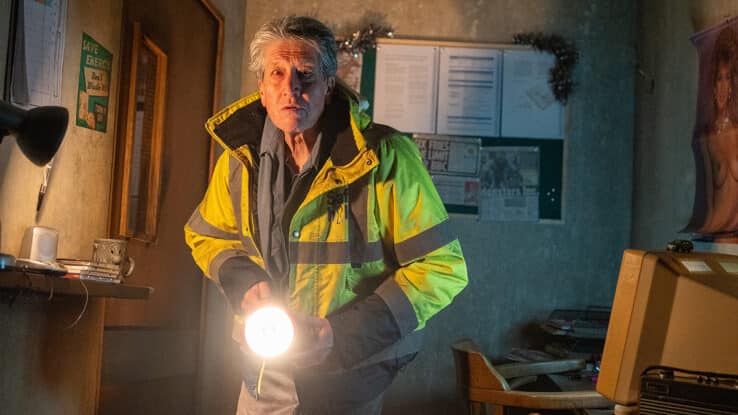


Behind the scenes at the scariest play in the West End
Co-creator Jeremy Dyson spills the secrets of Ghost Stories ahead of its special six-week return London run this Halloween
The first rule of Ghost Stories is you don’t talk about Ghost Stories. Since the “The West End’s scariest show” first lifted its curtain in 2010, the play has seen several revivals, two UK tours, been transferred to Australia, Canada, Russia, Peru, China, Finland and the Netherlands, and been adapted into a major film. But still, if you’ve seen it, you don’t talk about Ghost Stories.
Part of the magic of the show is in not knowing what to expect, and it’s a secret that terrified audiences have amazingly been willing to keep now for 15 years. “It’s extraordinary, in this day and age,” says co-creator Jeremy Dyson, speaking from London’s Peacock Theatre where Ghost Stories is about to begin a special six-week Halloween revival run. “You can find out what the story is, but the actual experience of what you see, what you go through when you sit in your seat, that has still been protected. If you give people a secret worth keeping, they will keep it.”
Ironically though, the real secret of Ghost Stories isn’t anything too mysterious – it’s in the quality of its storytelling ad stagecraft. Written and directed by Dyson and Andy Nyman, the play is a rare blend of the old and the new – a classic horror tale told simply, and effectively, with modern effects and real attention to detail.
We sat down with Dyson ahead of the new run to talk the (after)life and legacy of the only play around that’s far too scary to talk about. No spoilers here…

Ghost Stories has come a long way since 2010, what does it mean to be returning to London after all this time?
It’s the strangest thing that it’s still alive, particularly when you get back in the rehearsal room with it, when you’re back into the nuts and bolts. Because the remarkable thing is, I’ve lost count of the times me and Andy have remounted it ourselves, but you never get bored of it. You never really get to the bottom of it. There’s something a bit mysterious about it.
I mean, on a practical level, each time we stage it, it’s an opportunity to solve another technical problem. It’s such a technical show, so there’s that joy in refining and refining and refining, and it’s definitely, from a technical point of view, the best it’s ever been. But also I think our relationship has deepened with it over the years, because we made the film, which was like a whole other journey. Ghost Stories is deep in our bones, so it’s a very privileged, very joyful, creative journey to be still going on.
And the other amazing thing is, because it’s been 15 years, we get people who came to see it when they were young now coming with their kids. And that’s just an incredible thing – that two generations have enjoyed it now.
Have you had a chance to step back and reflect on the legacy of the play like this before? Does it feel like it’s being cemented as a classic now?
I don’t know what it is! I mean, it’s not healthy to think about your own work in that way, so we tend to take a much more pragmatic approach of just looking at the job in front of us, rather than standing back and thinking how wonderful it is or isn’t. But having said that, when we get the opportunity, I do think it’s remarkable. Not we’re remarkable, but the thing is remarkable. And of course it isn’t just us – it’s the extraordinary team that we had the good fortune to be able to assemble originally, who have all individually gone on and done amazing things with their careers. What’s happened with the show is just a lovely, lovely thing, because you never know. With anything that you do, you never know – it’s out of our hands.
It was all uncharted territory when you first launched it too I guess – The Woman In Black was basically the only horror play around. It’s since become a major genre on the stage, from 2:22 to Stranger Things. Did you know back then that this could be the start of something new?
All I will say is that the germ of what became Ghost Stories began with Andy’s observation that he made back then, that it was crazy that there’s only one scary play on the West End, which was Woman In Black. A big part of the genesis of Ghost Stories was our desire to do another one, and one that wasn’t the same, that had its own territory, that was contemporary. And so everything that’s happened since has confirmed that our suspicions were correct. It’s like only having one comedy on, it just doesn’t make any sense.
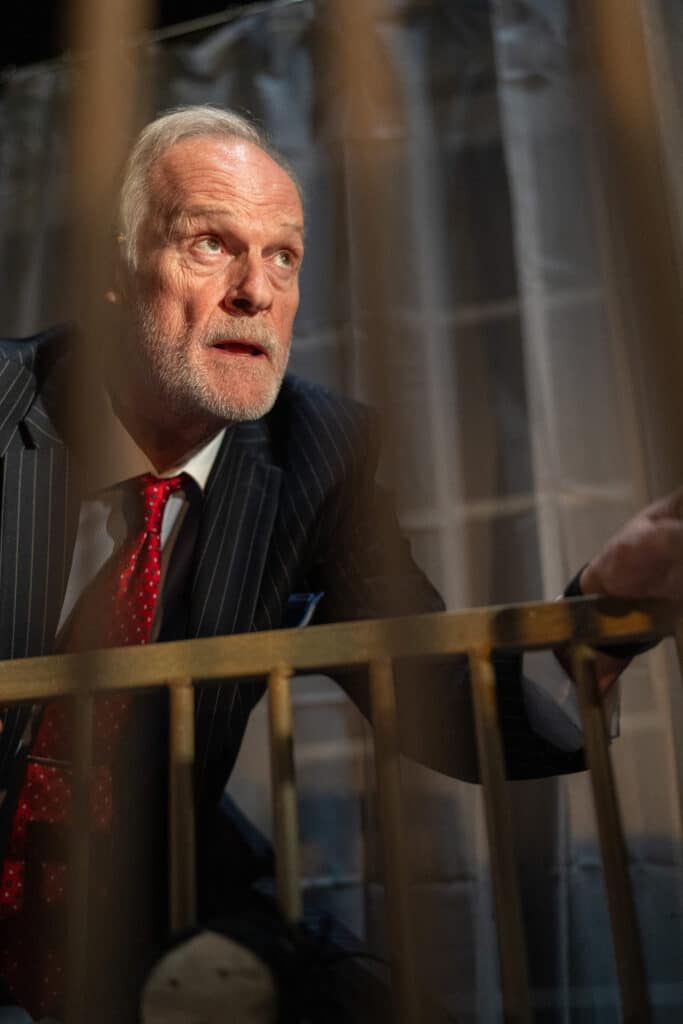
How hard is it to keep scaring people? Have audiences changed over the years?
No, I don’t actually think they have. I think the desire is the same. In the same way the desire to laugh when you go and see a comedy is perennial. One of the lovely things, actually, about remounting it is experiencing it afresh with a new audience. We get a lot of repeat business, but it’s still going to be mostly people who haven’t seen it before, so feeling those responses in all the same places is just amazing. There’s something lovely about the timelessness of that, I think, because it means that they’re immersed in the story and the emotions and everything that’s happening on the stage, and they’re having a human response to it. So I think it sits outside of fashion.
Is there a secret to getting that reaction? Have you found anything surprising through reworking and refining those emotional responses over the years?
For an audience to be really frightened, they’ve got to be engaged emotionally. They have to care about the characters. You don’t have that response if it’s just a mechanical “boo”. Although that’s part of the machinery of the show, that is not what the show is. Those “boos” are used in service of telling a story.
But that’s part of it. I think the other thing is, in the same way that to do comedy you’ve got to have funny bones, as they say, I think to be able to do this well you’ve got to have scary bones. And that just means you’ve got to love the genre and have it in your heart. I think you’ve really got to make the thing that you yourself would love to see, and that was always our only guiding light.
Have you had a favourite audience reaction over the years?
When it first transferred to the Duke Of Yorks, there was one night, when Reece [Shearsmith] was doing it, when Andy came down to the theatre because he was visiting after the show, and he saw an ambulance parked outside. He told me he thought simultaneously that he hoped it wasn’t too serious, but at the same time, that whatever it was had happened because of what was on stage!
Was it?!
Yeah, somebody had got a bit overwrought… I think they were feeling lightheaded. Everyone was fine.
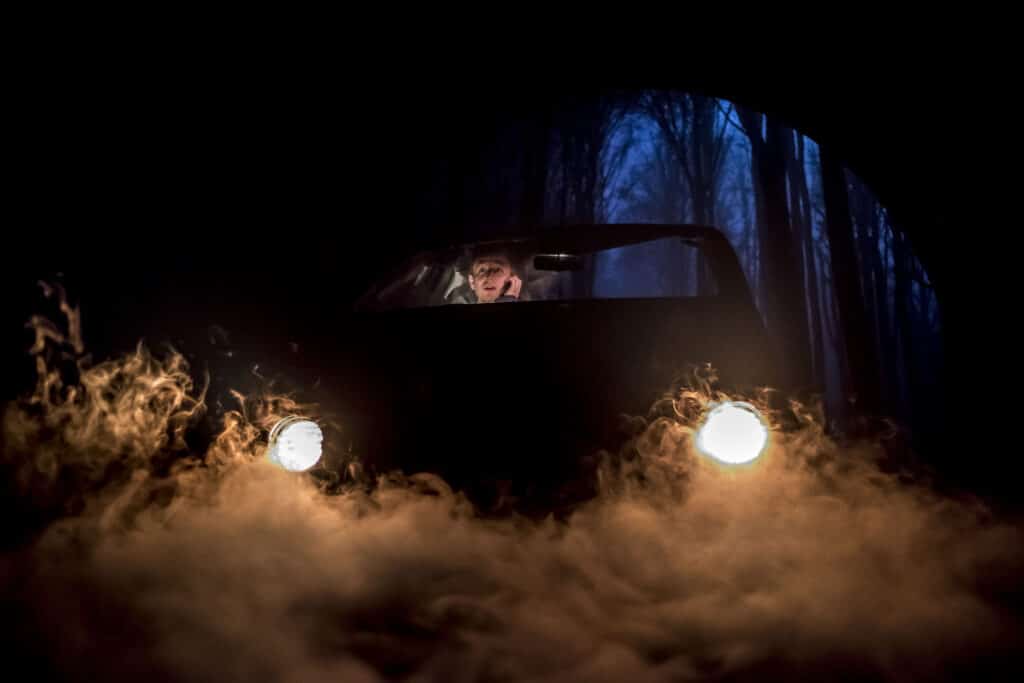
There’s obviously there’s a lot of incredible technical wizardry and stagecraft going on – which I won’t mention here as it might be saying too much – but Ghost Stories also feels nicely old-fashioned. How much of the roots of what you love about this show are buried in classic horror literature and films?
It’s a huge part of why we did it, to be honest. In fact, when we started work on it, the first thing I did was to give Andy a list of my favourite ghost stories to read, and he gave me some films that I hadn’t seen to watch. So we were quite consciously immersing ourselves in the genre. It’s the soil from which it grew, definitely. I wouldn’t say there’s homage and references directly, but the spirit of the show is drawing on the spirit of those of those films and stories.
What can you tell us about this new cast, and what we can expect from Ghost Stories in this run?
It’s been quite a journey with the cast. The bulk of our cast have done the tour. Or at least half of the cast have done the tour, including David Cardy, who was in the very first production, which is fantastic. But we’ve also got Clive Mantle, who I’ve always wanted to work with, because I’m a huge admirer. And then Johnny Lewis is now playing Professor Goodman, and he’s such a joy to work with. It’s a brilliant cast, and I can’t wait to get into the run with them.
What’s next for you? Can you imagine celebrating 30 years of Ghost Stories in another 15 years?
Well, immediately, the next thing for me and Andy is a new play, which is opening in York Theater Royal at the end of April next year, called The Psychic. So we’re very excited about that. But as for Ghost Stories, I think what we’ve discovered is that there’s still this huge appetite for it. When we took it around the country we played some very sizable theatres which we never thought we’d be able to fill. We were at Edinburgh Playhouse with it, which is an enormous theatre. And The Lowry. So the fact that you can take it to a venue like that and fill it is sort of testament to, I guess, the legs that the show maybe now has. So I definitely think it would be nice to take it out on tour again, when we feel enough time has elapsed that people might want to come and see it again. Whenever they’re ready for more…