Music


Interview
My Greatest Hits: Trevor Horn
With The Trevor Horn Band set to embark on a handful of dates ahead of the Christmas break, "the man who invented the 80s" discusses his impressive legacy
Trevor Horn was dubbed “the man who invented the 80s.” Not a bad nickname to be bestowed with, given the decade itself was unique era of pop cultural invention. One that was turbo-charged by the advent of MTV, a channel which revolutionised the music industry. Funnily enough, Trevor Horn was the first artist to be played on MTV, with The Buggles’ beloved number one hit ‘Video Killed The Radio Star’ opening proceedings at 00:01 on 1 August 1981.
But it’s an accolade the bespectacled bassist-turned-super producer humbly ignores. “When people first used to say that, I used to argue it. But now I’ve given up,” Horn shrugs over Zoom, talking from the his home studio. “I mean, I was just one of the first producers to have the gear that was making records commercially. Other people had the same gear, Peter Gabriel. But he was an artist not a producer. So I applied it to quite a few artists, which is why I guess I got the nickname.”

Having moved from behind the mic to behind the mixing desk, Horn orchestrated a series of the 80s’ most impactful and iconic hits, producing the likes of Frankie Goes To Hollywood, Grace Jones, Pet Shop Boys, Simple Minds, and even Paul McCartney. His influence stretched into the subsequent decades too, propelling pop and rock acts like Seal, Tom Jones, Rod Stewart, LeAnn Rimes, Charlotte Church, Faith Hill, Texas and t.A.T.u. (yes, t.A.T.u.) to pop chart dominion, winning a Grammy Award, an Ivor Novello Award for Outstanding Contribution to British Music, and a handful of BRIT Awards to boot.
With The Trevor Horn Band set to embark on a handful of dates ahead of the Christmas break, Horn sat down with us to discuss his own landmark moments for My Greatest Hits.
‘Video Killed The Radio Star’

When ‘Video Killed The Radio Star’ went to number one, that was a huge moment. The Buggles came from nowhere. It’s not like we’d worked our way up. I’d been producing records for about five years at that point, so poured everything I knew into ‘Video Killed The Radio Star’. It was the first record I’d did where I was the artist, well, me and Geoff were the artists. Because we’d written it as well, it brought in the money to buy me a Fairlight CMI.
Of course, it’s been crystallised in pop culture as the first video to be played on MTV. The song itself was rather prescient. Did you actually have any idea about the advent of music videos and how they’d shape the future of the music industry?
I think if we were prescient about anything, it was more about the idea that at some point in the future, someone could sit at a computer to make an entire record – and a music video as well. That was the idea behind the name The Buggles, as it was a riff on The Beatles. The idea was that a couple of guys in a basement of a record label conjured up a band and had written a song for them. That was in 1978. Today, you’ve got AI, so you can actually do that.
AI’s going to kill everything, right?
Well, it just makes you realise how formulaic things have become. If a computer can analyse a formula and make a record for you… I think if I was younger, I’d probably be using AI a lot.
So, you have no animosity towards it?
Not really. I don’t think it can actually write anything. Everything AI-generated leaves me absolutely cold. Saying that, my son is always getting me to pay attention to it. The other day we were on a walk and he said ‘dream up a record’, so I gave him the line ‘since you left I miss you’. That’s a pretty ordinary lyric. He put it in this app, then added duelling banjos, techno, and f*ck me it generated it. 144 BPM with banjos playing. It was awful. But it was exactly what he asked for. It’s capable.
Joining Yes

Joining Yes as their singer was a landmark moment for me, making an album with them. Even though it was a very difficult time, as I wasn’t as good as the guy before, Jon Anderson. He has one hell of a voice. I couldn’t really do 44 shows across America. In a way, it gave me a lot of confidence. Once you’ve played three dates in a row at Madison Square Garden, nothing phases you. You’re not impressed by anybody. Well, not not impressed but not in awe of.
Were you a fan of Yes beforehand, and do you have a favourite record of theirs?
The irony is, is that I produced 90125 which is by head and shoulders their biggest-selling album. But as an old Yes fan, 90125 isn’t my favourite album. Close To The Edge is my favourite album of theirs.

As progressive rock pioneers, their sound shifted as they entered the 80s, a transition which you were a part of. Did you sense any of the mixed response towards that change?
There’s always a mixed response towards Yes, even from die-hard Yes fans! But I have to be honest, I didn’t really experience any negative responses. We scored a number one single in America [with ‘Owner Of A Lonely Heart’], which the band were really pleased with. It was an unusual track. It wasn’t lame. Other bands, like Chicago, were like a prog band when they started out. If you like horn sections, Chicago’s horn sections were brilliant. Then David Foster got hold of them and they turned schmaltzy.
Meeting Jill Sinclair

When my late wife [Jill Sinclair] started managing me, I didn’t realise how fortunate I was. Besides from keeping everybody away from me, which was a wonderful thing. You don’t know how people can fuck with your head. The record labels at least. She made a plan, and made me work with Dollar. At first I was a bit like ‘is this a good idea?’ and she was convinced it was. I did four songs with Dollar and that’s still some of the favourite things I’ve produced. I still worked all of the gear at that point. Nowadays it’s all got so complicated. Her taking over my management was a huge thing. The second thing she brought me was ABC.
ABC’s The Lexicon Of Love

Jill was really straightforward. She said write a song for The Buggles but do it with Dollar. Looking back, I should’ve done more writing. But I thought producers that wrote their own songs would always end up in a cul-de-sac. I thought it’d be better being prepared to be open, and that way I’d get my hands on better material. When I first heard ABC, ‘Tears Are Not Enough’, I didn’t realise what an excellent lyricist Martin Fry was. When you listen to the lyrics, they’re really quite brilliant for a dance-pop record. I was listening to an interview with Nile Rodgers the other day, and he said how embarrassed he was when David Bowie brought the lyric “tremble like a flower” to ‘Let’s Dance’. Of course he was embarrassed – look at Chic’s lyrics?! The lyrics are terrible.
It’s all about the hip-shaking with Chic. Did you know ‘Poison Arrow’ was going to be a hit?
‘Poison Arrow’ had everything. I knew it’d be a hit. It was a great track. It had really great lyrics. The more I heard it, the more I loved it. That opening line: “If I were to say to you:
“Can you keep a secret?” / Would you know just what to do / Or where to keep it?” Martin was just really great with lyrics. I knew it was going to be big.
Did working with ABC make you realise how you could shape much of the artists and music that were coming out at that time?
When I met them, I realised very quickly that they were all very bright. Being intelligent is a useful thing, even in the music business! Not to be underestimated. Back then, the studio was a place where you’d have to spend a lot of time in to understand what it was capable of. Now it’s different. It’s like cooking stuff out of a packet. You get pre-packaged sounds. To keep with the kitchen analogy, you had to make the sauce yourself from scratch. That took experience. These bands wanted to make records that competed with American records, and I knew how to do that. I spent the previous five to six years in recording studios. I worked with them not out of this great desire to shape how they sounded. I just wanted to make the record that they wanted.
Frankie Goes To Hollywood’s Welcome To The Pleasuredome
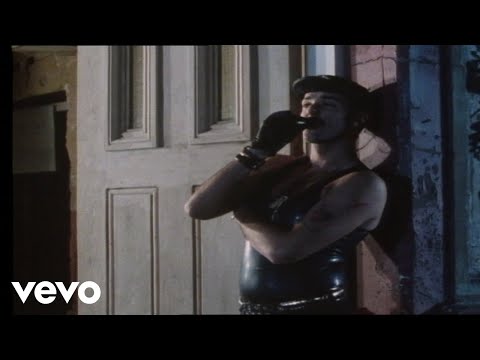
Even still, ‘Relax’ and ‘Two Tribes’ are the two biggest-selling 12″ singles in the UK. It was sort of unintentional. I got in real trouble for the first mix of ‘Relax’, which they called the “sex mix”. We actually got letters of complaint from gay clubs saying it was too pornographic. It was extraordinary. I tried a few times to get the mix for ‘Relax’ right, and did it over a few times. But those were amazing records. I was very lucky then. I met Steve Lipson, and he and I worked together for about four or five years. We were a really good team.
If you single them out as songs they’re spectacular. But the controversy around how overtly sexual they were at that time, do you think that elevated the success to a new level?
Well, the BBC banning them was great because it meant you had to buy the records. They were banned from the radio so it meant they never got played to death in the same way that other records did. That definitely helped Frankie Goes To Hollywood. This might sound funny, but when Holly [Johnson] was singing “when you want to suck it, chew it”, I thought he was singing “when you want to sock it to it.” It was something about the beat, the great big orgasm in the middle. It was so much fun.
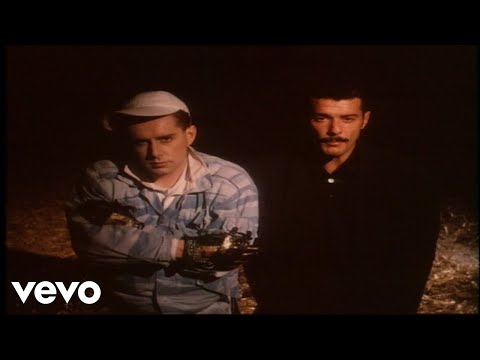
I love the track ‘Welcome To The Pleasuredome’, as it’s got some prog rock fingerprints on there.
I was trying to do Close To The Edge again. Just a hyper sexy version! It was only three-and-a-half minutes long when we started with it. Steve showed me that we had these two digital multi-tracks, and he offset one machine against the other, so was playing the verse and the chorus at the same time. Once I grasped what that could do with the track then, we got going. It went from about three-and-a-half minutes to sixteen minutes in total.
Grace Jones’ Slave To The Rhythm

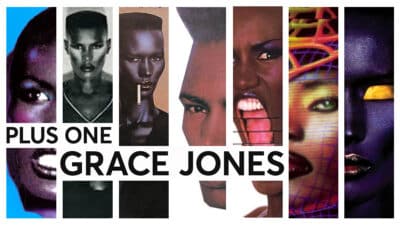
Working with Grace Jones was an interesting moment. Grace was good fun, and much warmer than she gets credit for. She was born in Jamaica and brought up in New York, but she had that Jamaican warmth. That was a moment. I remember being in the back of a minivan with her after seeing Jackie Chan’s Police Story, and we got talking to him after as it was a premiere. He was in the front of the minivan and we were in the back. We went to Grace’s restaurant downtown in New York, and there were effigies everywhere. Nobody paid the bill. We were thinking ‘this place won’t long if nobody pays the bill…’
The title track was obviously a huge hit. How did it evolve in the studio?
We did a few different versions of it. I used some go-go musicians. At the time I was really fascinated by go-go. It had a brief thing in Washington. Chuck Brown and the Soul Searchers, Experience Unlimited. I had a cassette of Experience Unlimited, but those records never lived up to what they sounded like live. They never got big enough to play anywhere too big, so the sound was always great. We did one version of ‘Slave To The Rhythm’, a rock version, which I hated. I thought if I’m only going to produce one Grace Jones track it’s got to have something more. So I hired the rhythm section from Experience Unlimited, but could only use the drums. They couldn’t learn the arrangements. It was alien to them. There was me trying to get specific, but their arrangement was start then finish. Still, it turned out really well. There are still other Grace tracks I think are better. ‘La Vie En Rose’, I think is one of the best tracks Chris Blackwell ever produced. He’s an underrated producer.
Her cover of Iggy Pop’s ‘Nightclubbing’ is a personal favourite.

That was good, but it’s not a particularly nuanced song. I loved ‘Warm Leatherette’. I read Crash, which is was based on. That’s a hard book to read. Have you ever read it?
No, but I’ve seen the David Cronenberg film. That’s an experience.
J.G. Ballard. The book read better than the film. When you talking about people with prosthetic limbs wanking other people off. It was very brave of Cronenberg to try and pull that off.
Grace was known for being a strong figure. Was there ever any moments when things got a little tetchy?
Well, I got tetchy with her. Once she showed up four hours late with a great big group of people that came into the control room off their faces. I hate that, it’s so distracting. Then she got pissed with me as I wouldn’t return her phone calls. Grace could be reckless. But she’s still going strong. I saw her recently at the Hollywood Bowl, and it took me about half an hour to realise she was topless. I had to ask the person I was with “are those Grace’s tits?” Not many 70 year olds can get away with that.
Band Aid

I only did the B-side for Band Aid. But it was huge for our studio. It was the only time in my life where I’ve said that classic thing ‘do you know who I am?’ My late wife called me and said ‘get your ass down here, everyone’s here at the studio’. So I got in the car and drove down. When I got there, two guys said I couldn’t come in. I had to confirm I owned the building. The only time in fifty years I’ve said it. They showed a film of it recently. It was funny. Jill was there too. There was me being introduced to Bono. But yeah, I did the B-side.
Were you starstruck at all?
I remember saying to Jill “that kid with the stovepipe hat on has got a voice on him”, which was Bono. I’d worked with Simon Le Bon at a charity gig last year. Simon was great. He was really funny, I really liked him. It was the first time I’d properly spent time with Simon. I told him about saying Bono had a great voice, and he got pissed off at me.
Meeting Seal
![Seal - Kiss From A Rose (Official Video) [HD]](https://i.ytimg.com/vi/hDd2G_V1rzc/0.jpg)
Out of anybody I’ve ever worked with, my partnership with Seal has been the most enduring partnership. I’ve made six albums with him.
He’s gone on record saying that ‘Kiss From A Rose’ wouldn’t have sounded anything like it did without you.
That’s sort of true. I found his demo about four months ago whilst looking through some old tapes. It was really good. It was just him. Throughout his entire catalogue, ‘Kiss From A Rose’ is the old song that’s kind of just him. The first song we did together was ‘Crazy’. But meeting Seal was a huge moment for me.
‘Kiss From A Rose’ continues to be my karaoke song to date, though I’ll never do it justice. At that point, it felt like music soundtracks were at their zenith, and ‘Kiss From A Rose’ really exploded after it was attached to Batman Forever.
Seal had a really good manager. A great manager can make such a huge difference to an artist’s career, although it’s often difficult to discern what they’re actually doing half the time. Seal’s manager was Bob Cavallo. ‘Kiss From A Rose’ was already released, but it didn’t really connect. It was too unusual. People wouldn’t play it. I was convinced I’d got it wrong. Adamski did a great remix called ‘Kicks From A Rose’, which both me and Seal really loved, and I thought I should’ve recorded it like that. Instead, I recorded it in an organic way. I was working with Rod Stewart, and his team did market research on Seal’s album who said Seal would’ve done better if I did a better job with ‘Kiss From A Rose’. I felt pretty miserable about it. Then it got picked for Batman Forever. Right at the last minute, the director Joel Schumacher took all the music out and put it all at the end. Bob was really clever, and twisted Joel’s arm to direct the music video. He used loads of clips from Batman for it, and suddenly it became a promo video for Batman Forever. It wasn’t even the first song on the end credits – they used a U2 song instead, which wasn’t particularly memorable.
Coyote Ugly

Doing the music for Coyote Ugly was an interesting experience. Getting to work in Hollywood, to see the whole thing from the inside. I really enjoyed it. Malcolm McLaren said once that the major difference between the music business and the movie business was about 15 IQ points across the average person. People are generally are a lot brighter, so he wasn’t far off. I loved working on that film. It’s not a particularly great film, but it still gets played a lot.
‘Can’t Fight The Moonlight’ is a banger though.
That’s Diane Warren. Originally another song was the main song, called ‘Fight Now’, which wasn’t great but we’d spent a lot of time on. The people from Disney decided it had to go. Diane, in desperation because she didn’t want to lose the job, came up with ‘Can’t Fight The Moonlight’. It’s one of those songs where you don’t take the lyrics too seriously, but it’s a good tune.
It comes to life with LeAnn Rimes’ voice. She was quite young at that time?
About sixteen. The first time she sang it in my house in LA, I asked “how on Earth did you learn to sing like this?” She said she’d been fronting her own band since she was eleven. She has the best jukebox voice I’ve ever heard. LeAnn had a great team around her too, a group of guys from Texas. She’d never worked with another producer before, so they came along to keep an eye on me.
t.A.T.u. – ‘All The Things She Said’
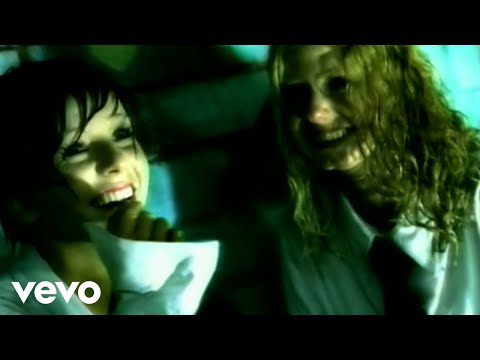
That was interesting. I produced t.A.T.u. on the condition I could write the lyrics. It was one of those things I didn’t really think about until the day before the studio. Then I listened to the Russian version, and had to write it out phonetically. It was as close as I could get. They’ve got 30 odd consonants. The translation of the lyrics was garbage. “I’m on fire, I’m on fire.” Something like that. Getting those girls to sing in English was one of the hardest things I’ve ever had to do. But they were really nice girls. By the end of it we became really good friends. Their manager was an awful guy. The girls though, they’d come to me going “Trevor, Trevor. Cigarette?”
One of my children is trans. He loves it. It was my best moment in his eyes. I didn’t realise it’d go down so well. I thought, at least my take on it, was that it was just a phase. That’s why I wrote the lyric: “This is not enough.” But it had a huge impact on people. I produced it, then forgot about it. Then a friend called me to say it’d gone to number one. It was a different era then when you sold records. We sold 7.5 million albums of the back off that record.
The Trevor Horn Band will play a handful of UK dates in December 2025. Find tickets here.