Music


Interview
The Orchestra (For Now): “We’re not going to shy away from ambition”
One of London’s buzziest bands talks on European festivals, online fandom and their seemingly irrepressible rise
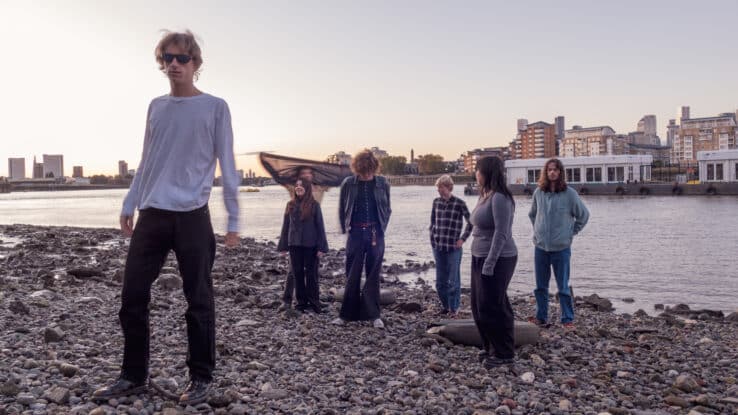
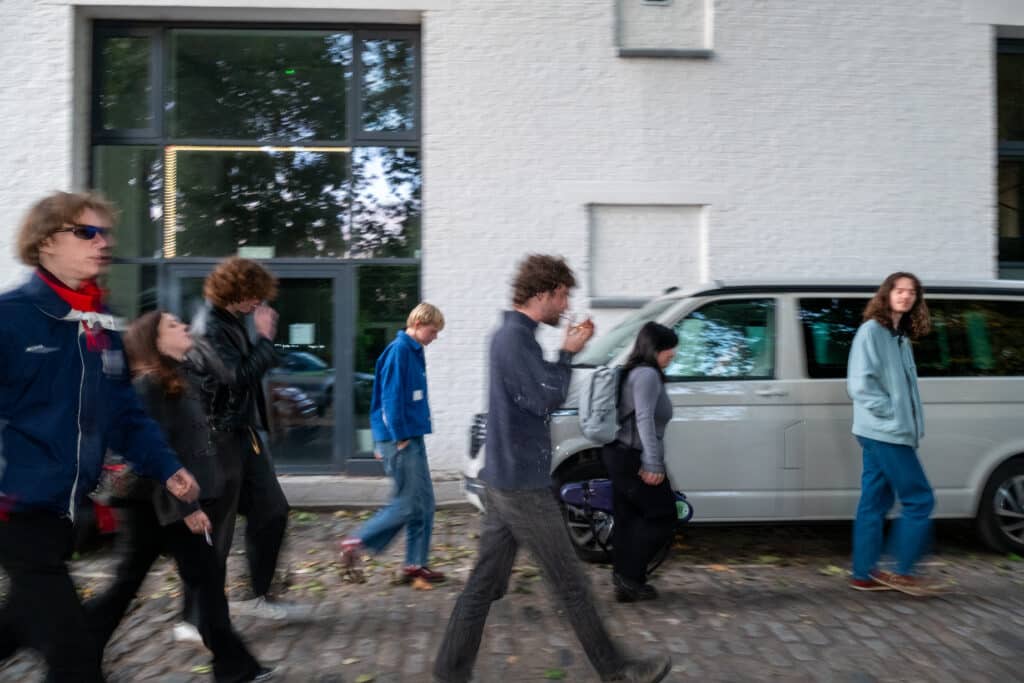
If you’ve been around London’s guitar music scene the last few years, chances are you will have come across The Orchestra (For Now) at some point. The band aren’t exactly hard to spot with their seven members often hard-pressed to fit on the capital’s small, local stages. But they’re making some noise whilst they’re at it. Having made that hallowed of grassroots venues, The Windmill in Brixton, something of a second home, the past year or so has seen them not just become the darlings of the London underground, but the rest of the country taking note too.
Playing a sprawling brand of baroque prog-punk, it is perhaps no surprise to see comparisons to fellow Windmill alumni (hello Black Country, New Road), but The Orchestra (For Now) are forging their own path, and creating their own sound. Able to create walls of sound that give way to vulnerable moments of quiet, their music is at once both complex and compelling; it takes a few listens to get everything, but
In the days leading up to the release of their latest EP, Plan 76, and before the band head out on their biggest UK tour to date, we catch up with vocalist/pianist Joe Scarisbrick to talk about the pitfalls of having seven members, breaking out of the London scene, and why being ambitious is the only way forward.

Lets go back to your last EP, Plan 75, how important was it to get that out there?
Initially, we always wanted to do an album first and we wanted to avoid the EP thing. But the issue is, is that you have no money when you start and albums cost a lot of money, whereas EPs are cheaper. So, we’ve kind of copped out and we’re releasing an album over two EPs. And then it was like, how do we make that feel consistent? And so, the first record was basically just the first four or five songs that we had together, and then edited and rearranged and reworked until they felt like a body of work. It was always meant to be this bigger thing but that costs a lot of money.
How are you feeling now, building up to the release of Plan 76, is it just a case of picking up where you left off?
There are quite a few through lines. And it also feels like a step up and a bit less silly. I think we got out a lot of silliness on the first one. When you listen to it, I mean I’ve only recently re-listened to it, it feels like it’s all quite serious music, but then if you actually listen it’s kind of a bit mind-numbingly stupid as well. Some moments which, you know, were fun to get out, like stupid references or stupidly big sections, and at the same time that was important. But this new one feels like we’ve taken less liberties.
Have you found that there are any changes now of the crowds that come and see you now that you’ve grown a bit in stature, or is it just more of the same?
I think people probably take us a bit more seriously now, especially the last couple of releases, the response has been a lot more direct and earnest. And I remember we played a semi-secret show at The Windmill just before End Of The Road, and we played for like an hour and 40 minutes or something nuts, and the first 40 minutes was just chaos. It was just like pure mosh pit. And when we go out and play in cities we don’t play in a lot everyone’s very calm, everyone’s very relaxed, everyone’s very chill and normal. And then we play one show there [The Windmill] and its crazy. There was crowd surfing! How do you crowd surf to our music? That’s absolutely nuts. It was really impressive. We have that core, very passionate fan base, particularly in London.
I think you might have to get used to that, because I feel this is a heavier record. Was that a choice, how did the process work this time around?
A lot of the songs on this one, we wrote very quickly before Green Man last year, because we’d never played a 45-minute set before. So, we had space to fill, but we wanted to make that space really engaging. And in that moment it felt like the easiest way to do that was to just go heavy. It may be a bit of a cop out, but in my experience, live music is pretty good when it’s very big, very bold, and exciting, so I think that that definitely feeds into it. It’s very much a reaction to the live show.

It’s interesting that you say it’s written quite quickly because I feel you’ve always been a band with complexity as a core element. How does that happen? Is it just a byproduct of having so many members?
I think we always want to take ideas to their end points. And a lot of the time that means everyone playing consecutively on a piece, and then you have to work out how you do that for it not to sound awful. A lot of the time it’s just really careful arrangement. But then the end product, when it’s washing over you, it’s like “holy fuck, there’s so much going on right now”. Hopefully it takes a couple of times to get into it and get through it, but it’s very much just us being as ambitious as possible. And there’s also a real thing at the moment of like, ‘band bands’, like ‘band bands’ are doing really well right now. There are some times I wish we were a ‘band band’. Like, I wish we could just play our guitars and just be a band. But then we do that, and we have fun in rehearsals rocking out and it’s fun, but I think we always want to try and utilise everything that we possibly have all the time. And we’re not finished, that’s still an ongoing thing. This record does it better than the last record, and then the one we’re working on now is progressively getting better. A lot of it is just stripping it back and being more careful each time. It’s not like everyone’s playing over each other. Hopefully it meshes together into something that’s better than the constituent parts.
And you guys started as a duo, how did seven members come about, and what is that like?
We were just joking the other day about how I didn’t want to record synths live, and I was like, “oh, we’ll just get a session musician”. And they were like, “what? hold on, that’s absolutely insane! we’re not going to do that”. But I do think seven is a lot, and it’s very frustrating sometimes because it’s hard to tour and it’s hard to do a lot of things. But, at the same time, my reference point has always been the band Love, and their live takes – it’s so ambitious. The songwriting is very different, like I’m not Arthur Lee, we don’t have Brian MacLean on the fucking guitar, but they have insane orchestral arrangements. And I just always want to come back to that. It’s the full experience, you know. We can do it as a rock band, or we can do it with me just playing the piano or just playing the guitar or whatever it might be, but people really enjoy seeing bodies on a stage or hearing a really full, expressive arrangement. But then, in the same way, we can have these sections, like in Amsterdam, where everyone’s playing at maximum velocity, and then we come back and it’s Neil playing guitar with a fucking paintbrush.
I know you’ve mentioned before about the visual aspect of having seven people on stage, which is something I think other people, and other bands, probably don’t think about. How did exploring the visual aspect of the band come about?
A lot of it was probably accidental, in retrospect, but it was more like, who do I trust when I was when it was starting out. The band’s only been going for two and a half years, and the band itself has had more ex-members than current members, I’m pretty sure. So the goal was always to have the right group, and I think after a lot of trial and error, we settled on this. And incidentally it looks fucking cool on stage. Is it practical all the time? No, but, I mean, we’re not going to shy away from ambition.
We’ve touched on it already, but I do want to ask about London. I’m sure you’re already sick of the BCNR comparisons, but how have you found the scene, particularly at The Windmill? It does feel at times people are still clinging on to when Black Country, New Road, or Black Midi were playing there, rather than embracing the new bands that are coming out of there at the moment.
People have very short memories. I also do. But I think one thing that’s important is that none of this happens in a vacuum. And there has been a canon of rock music over the last 10 years or so, from Fat White Family onwards, for that specific venue, so you can kind of trace it back. And, I mean, you can even go further back than the Fat Whites. The Killers played that venue, or The Vaccines, even. Metronomy used to play there all the time, and bands like Alabama Three, like there’s a canon of music from that place. And so it’s hard to say with the comparisons – there’s always gonna be comparisons. But then there’s also another canon of progressive rock music, which goes back like nearly 60, 70 years. So people are normally very nice about it, it’s normally a compliment, and it’s a nice compliment to be referred to in terms of a very successful band from a similar place like Black Country, New Road. I’m not against it.
And how important has London been more generally, away from The Windmill, in terms of a learning environment for a band?
I mean, there’s a lot of people that will take advantage of a new band or a young band. I think there’s probably 10,000 too many promoters in London who will always take their larger than fair share. But fundamentally, people don’t go to a venue or space if there’s no one playing. So I think, and obviously your question is about London generally, but going back to the Windmill, it’s band-first – and there’s a few venues like that. I think London, because it’s so big, it means that there’s space for a non-monopoly in the grassroots scenes, but there’s also obviously a lot of exploitation, and bands get ripped off quite a lot. But we were lucky, I think. I mean, I only played The Windmill because you got paid on the night in cash, and that was quite a nice feeling. You’d do a mediocre set to 25 people and then get 75 quid, and you’re like, “we did a great job tonight, it wasn’t so bad, after all”. So I think London also pushes you. But then, you know, Manchester is probably better at the moment for that. Brighton’s always been the same, there’s so many musicians there. And I like the trend of moving away from London. I think that’s probably slightly shooting ourselves in a foot because we’re from London, but I like the idea of everything not being so London centric.
Specifically with you guys, how do you feel about that jump to bigger venues, and slightly away from the grassroots?
Yeah, it adds to the element of prestige. And you can only fit so many people in these small venues, so it’s the natural thing to progress. But if it was up to us, I think we’d always play small, not like the ICA or Scala are stadiums or anything, but they’re bigger, they have security, they have a cloak room and pints cost even more. Actually, that’s probably it: the more successful you are, the more the pints cost at your gigs.
We’re gunning for the 10 pound pint gig. That’s the real sign of success.
And you’ve got a tour next month, including your biggest ever headline show. Are you excited for that, and also to get out into the rest of the country, to new places?
Yeah, we are! I mean, the best show, or the nicest show, we ever played was in Blackpool in January or February of this year and there was probably like 30 people there. But after the show, everyone stayed, and everyone was so excited about it and excited about live music. And we had the same experiences in Scotland and Manchester and Leeds, and it feels really good to meet people that are not just like London scene heads, or chronically online 17 year olds. And there are also places onthis tour that we haven’t played, like Sheffield. That’s going to be fun. And obviously a lot of those shows are a lot smaller in capacity, so it’s going to feel a lot more intimate and enjoyable. Not like some of the festivals we’ve just done, those are just crazy.
I wanted to talk about that because you guys won Green Man Rising, and then I loved all the End of The Road content – especially the ‘Perfect Day’ cover. What was it like to strip everything back for that? And, more generally, how have you found the festival experience?
Doing ‘Perfect Day’ was so fun, and it was fun to play two other unreleased songs on that stage as well. It’s a shame that there’s a Cameron Winter in this world, because I’d love to do solo piano stuff, but I’d never dream of doing that now. It was really exciting to strip everything back, especially because we’re such a big band and have a big sound, so it was nice to just bring it all the way back to what it actually is, which is a song. And festivals more generally have been pretty insane. That End Of The Road weekend was nuts, because we all wanted to stay at the festival, but we had planned to do Manchester and Edinburgh, so we had to leave. We got the hotel at like two in the morning and we were out by five thirty. But that’s what we want to do: running around the country and Europe. And European festivals are nuts. They really know how to make bands feel like they’re 10 times bigger than they really are. Like, you walk away from a European festival like with a suitcase of free beer, a takeaway dal, and 10,000 memories. And you’re like, wow, we’re on top of the world. Rhen you get back to your three-star hotel, hang out with mediocre, minor celebrities. It is nuts. All for just about breaking even as well.
It sounds like a lot! Have you got many plans for after tour, or is it just to have a bit of a break?
I could never have a break. I literally cannot sit still for more than 10 minutes. We are going straight into an album that’s pretty much on the cusp of nearly being almost ready.
So, we’ll be straight back into demoing and then building up to recording early next year. So right back into it. And every time I refresh my email, we get an offer for a show, so I think next year is going to be a lot of running around. Probably not another tour, but a lot of shows building up to album time.
And finally, given that this is for Ticketmaster, if people are going to come out to see you, and they maybe haven’t heard of you guys before, what should they expect? What’s your what’s your sound? What should they expect from a live show?
Oh, we’re incredibly Ticketmaster friendly. We’re built for the Ticketmaster clientele, through and through. This sound is designed for that blue logo. I mean, it’s a stadium sound in a small venue setting.
Find tickets to see The Orchestra (For Now) in London, Manchester and Bristol 16–20 November